
1099 Jobs Explained: Contractor Insights
The gig economy has transformed how people work, and 1099 jobs represent one of the most significant shifts in employment structure. Named after the IRS tax form used to report non-employee compensation, these independent contractor positions offer flexibility, autonomy, and diverse opportunities across virtually every industry. Whether you’re considering a career transition or exploring supplemental income, understanding 1099 work is essential for making informed decisions about your professional future.
A 1099 job means you’re self-employed rather than a traditional employee. You set your own hours, choose your projects, and manage your business finances. However, this independence comes with responsibilities—taxes, benefits, and business management fall squarely on your shoulders. This comprehensive guide breaks down everything you need to know about contractor work, from tax implications to finding legitimate opportunities and building a sustainable 1099 career.
What Is a 1099 Job?
A 1099 job is a position where you work as an independent contractor rather than a traditional W-2 employee. The term comes from Form 1099-NEC (Non-Employee Compensation), which clients issue to contractors who earned $600 or more during the tax year. When you accept 1099 work, you’re essentially running your own business—the client pays your business, not an employer paying an employee.
In practical terms, this means:
- You control your schedule: Work when you want, as much as you want, though clients may have project deadlines
- You choose your clients: Accept or decline projects based on your interests and availability
- You manage finances: Invoice clients, track income, pay estimated taxes quarterly, and handle business expenses
- You provide tools: Supply your own equipment, software, and workspace unless negotiated otherwise
- You have no benefits: Health insurance, retirement plans, and paid time off are your responsibility
The appeal of 1099 work is undeniable. Many professionals transition to contractor status to escape office politics, achieve better work-life balance, or earn higher rates. Others use 1099 positions as a stepping stone while building their own business. Remote-friendly companies increasingly hire 1099 contractors, making location irrelevant for many opportunities.

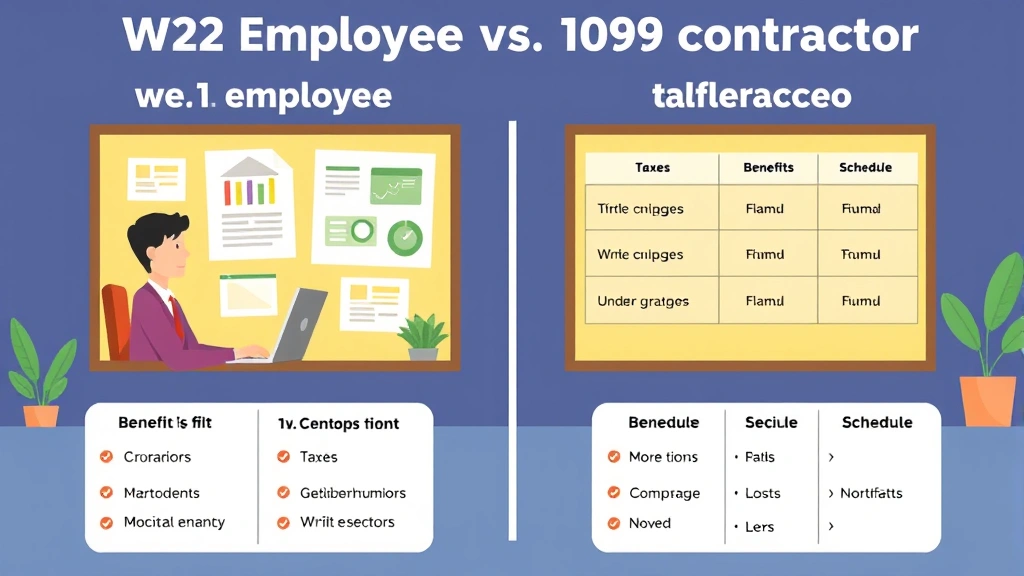
Key Differences: 1099 vs. W-2 Employment
Understanding how 1099 work differs from traditional W-2 employment helps you evaluate whether contractor status suits your situation. These distinctions affect everything from your paycheck to your legal protections.
Employment Classification: W-2 employees work for companies that control how, when, and where work happens. Employers provide direction, training, and feedback. 1099 contractors maintain independence—clients specify the deliverable, but you determine the method. This distinction matters legally; misclassifying employees as contractors can result in penalties.
Income and Compensation: W-2 employees receive regular paychecks with taxes withheld automatically. 1099 contractors invoice clients and receive full payment, then pay taxes themselves. Contractor rates are typically higher to account for self-employment taxes and lack of benefits, though income fluctuates more unpredictably.
Benefits and Protections: W-2 employment includes health insurance, retirement contributions, workers’ compensation, and unemployment insurance. 1099 contractors receive none of these. You must purchase your own health insurance, establish retirement savings, and handle your own coverage gaps.
Taxes: Employers withhold federal, state, and FICA taxes from W-2 paychecks. 1099 contractors pay self-employment tax (15.3% for Social Security and Medicare) plus income tax. You must make quarterly estimated tax payments or face penalties.
Legal Protections: W-2 employees have unemployment insurance, workers’ compensation coverage, and labor law protections. 1099 contractors operate outside these systems. You can’t file for unemployment between projects, and workplace safety laws don’t apply equally.
Expenses: W-2 employees rarely deduct work expenses. 1099 contractors deduct legitimate business expenses—home office, equipment, software, professional development—reducing taxable income significantly.
Tax Obligations and Deductions
Taxes represent the most complex aspect of 1099 work. Understanding your obligations prevents costly mistakes and maximizes deductions.
Self-Employment Tax: Unlike W-2 employees who split FICA taxes with employers, 1099 contractors pay the entire 15.3% self-employment tax on net income. This covers Social Security and Medicare. Calculate self-employment tax using Schedule SE, then claim half as an income tax deduction.
Estimated Quarterly Taxes: The IRS expects taxes paid throughout the year, not in one lump sum. Calculate your estimated annual income, divide by four, and submit payments quarterly (April 15, June 15, September 15, January 15). Underestimating results in penalties and interest.
Income Tax: 1099 income is subject to federal income tax at your marginal rate, plus state and local taxes depending on your location. You report all income on Schedule C (Profit or Loss from Business), which flows to your 1040 tax return.
Deductible Business Expenses: This is where 1099 work offers significant advantages. Legitimate deductions include:
- Home office (square footage method or simplified $5 per square foot)
- Internet, phone, and utilities (business portion only)
- Software and subscriptions used for work
- Equipment and tools (depreciated over time)
- Professional development and courses
- Business insurance and licenses
- Marketing and website costs
- Travel for client meetings or conferences
- Meals and entertainment (50% deductible)
- Office supplies and furniture
Record Keeping: Maintain detailed records of all income and expenses. Use accounting software like QuickBooks, FreshBooks, or Wave to track invoices, payments, and deductions. The IRS can audit 1099 contractors more frequently than W-2 employees, so documentation is crucial.
Tax Planning: Work with a CPA experienced in contractor taxation. They help optimize deductions, plan quarterly payments, and identify strategies to reduce tax liability. The cost of professional tax help often pays for itself through identified deductions.
Finding Legitimate 1099 Opportunities
The gig economy includes both legitimate opportunities and scams. Knowing where to look and what to avoid protects your time and money.
Reputable Platforms: Established freelance platforms vet clients and provide dispute resolution. Explore job search resources and career guidance to understand market opportunities. Popular legitimate platforms include:
- Upwork: Largest freelance platform with diverse projects
- Fiverr: Service-based gigs with portfolio building
- Guru: Project-based work with secure payments
- PeoplePerHour: European-focused freelance marketplace
- Toptal: Vetted professionals for high-level positions
- Freelancer.com: Bidding-based project platform
Direct Client Relationships: Many contractors build sustainable income through direct relationships with companies. Network on LinkedIn, attend industry conferences, and reach out to past employers. Direct clients often pay more since there’s no platform fee, though you lose buyer protection.
Job Boards: Traditional job boards increasingly list contract positions. FlexJobs, Indeed, and LinkedIn filter by contract work. Information technology positions and web development roles frequently appear as 1099 opportunities.
Industry-Specific Platforms: Certain industries have dedicated contractor networks. Designers use 99designs and DesignCrowd. Writers find opportunities on Scripted and Contently. Developers browse Gun.io and Stack Overflow Jobs. Identify platforms specific to your field.
Red Flags to Avoid: Scammers target contractors through:
- Requests for upfront payments before work begins
- Unclear project descriptions or vague requirements
- Pressure to work quickly without contracts
- Communication only through informal channels (text, WhatsApp)
- Clients unwilling to use platform escrow services
- Too-good-to-be-true pay rates for simple work
- Grammar and spelling errors in job postings
Industries Hiring 1099 Contractors
Nearly every industry employs 1099 contractors, but some sectors rely on them more heavily than others.
Technology and Software Development: Technology careers increasingly embrace contract work. Companies hire contractors for specific projects, specialized skills, or to scale teams quickly. Web development offers abundant contractor opportunities—front-end, back-end, full-stack, and mobile developers command premium rates.
Marketing and Sales: Sales and marketing professionals frequently work on commission or project basis. Content marketing, social media management, SEO, and digital advertising attract contractors. Agencies hire contractors to handle overflow work.
Writing and Content Creation: Technical writers, copywriters, content strategists, and journalists thrive as contractors. Publications, agencies, and companies hire for specific projects or ongoing content needs. Writing offers flexibility and scalability—build a portfolio and raise rates as demand increases.
Design and Creative Services: Graphic designers, UX/UI designers, video editors, and animators find abundant contractor work. Design-focused platforms and agency partnerships provide consistent income streams.
Consulting and Professional Services: Consultants, coaches, trainers, and advisors work as 1099 contractors. These roles leverage expertise and build thought leadership. Rates are typically higher due to specialized knowledge.
Customer Service and Administrative Support: Remote customer service, virtual assistance, and administrative work attract contractors. These roles offer flexibility and lower barriers to entry, though compensation is modest.
Translation and Specialized Services: Translators, transcriptionists, and subject matter experts command strong rates. Specialized knowledge creates competitive advantages and premium pricing.
Building Your Contractor Business
Successful 1099 work requires treating it like a real business. Structure, systems, and strategy differentiate thriving contractors from struggling ones.
Legal Structure: Decide whether to operate as a sole proprietor, LLC, S-corp, or C-corp. Sole proprietorship is simplest and requires no registration, but offers no liability protection. LLCs provide liability protection and tax flexibility. S-corps and C-corps offer advantages for high earners but involve more complexity. Consult a business attorney about the best structure for your situation.
Business Banking and Accounting: Open a separate business bank account to track income and expenses cleanly. Use accounting software (QuickBooks, FreshBooks, Xero) to invoice, track payments, and categorize expenses. This separation simplifies taxes and demonstrates professionalism to clients.
Pricing Strategy: Research market rates in your field and location. Consider your experience, skill level, and demand. Charge by the hour, project, or retainer depending on work type. Build in buffer for taxes, benefits, and non-billable time. Many contractors underprice initially then struggle to raise rates—start appropriately.
Client Contracts: Always use written contracts specifying scope, deliverables, timeline, payment terms, and intellectual property rights. Templates are available through business organizations or lawyers. Contracts protect both parties and prevent misunderstandings.
Building Your Portfolio: Showcase your best work through a professional website, LinkedIn profile, and platform portfolios. Include case studies, client testimonials, and results. A strong portfolio attracts better clients and justifies higher rates.
Networking and Marketing: Build relationships within your industry. Attend conferences, join professional associations, engage on LinkedIn, and maintain relationships with past clients. Most contractor work comes through referrals and relationships, not job boards.
Systems and Processes: Document your workflow, create templates, and automate repetitive tasks. Systems increase efficiency, ensure consistency, and allow you to scale without proportionally increasing hours.
Challenges and How to Overcome Them
1099 work presents unique challenges that prepared contractors manage effectively.
Income Inconsistency: Contractor income fluctuates. You might earn $10,000 one month and $2,000 the next. Build an emergency fund covering 6-12 months of expenses. Budget conservatively based on average income, not peak months. Use slow periods for business development, skill-building, or administrative tasks.
No Benefits: Lack of health insurance, retirement contributions, and paid time off requires planning. Purchase individual health insurance or join professional associations offering group plans. Contribute to SEP-IRA, Solo 401(k), or other retirement vehicles. Budget for vacation time by raising rates slightly to cover unpaid days.
Self-Discipline and Motivation: Working independently requires self-motivation without managers or colleagues. Establish a dedicated workspace, maintain regular hours, and create accountability systems. Co-working spaces provide community and structure if working from home feels isolating.
Feast or Famine Cycles: Contractors often experience alternating busy and slow periods. Maintain a client pipeline by continuously marketing and networking. Diversify across multiple clients to avoid over-dependence on one income source. Build passive income through products, courses, or retainers.
Administrative Burden: Managing invoicing, taxes, accounting, and business operations consumes time. Automate what you can through software. Hire a bookkeeper or accountant to handle financial management. The cost is deductible and frees you to focus on billable work.
Client Acquisition and Retention: Constantly finding new clients is exhausting. Build long-term relationships and retainers with existing clients. Provide exceptional service to encourage referrals. Maintain relationships with past clients for repeat work.
Imposter Syndrome and Isolation: Working alone without colleagues or validation can breed self-doubt. Join contractor communities, attend networking events, and find accountability partners. Invest in professional development to build confidence and skills.
Legal and Tax Complexity: 1099 work involves complex tax and legal issues. Hire professionals—CPAs, business attorneys, insurance agents—who specialize in contractor businesses. Their expertise prevents costly mistakes and optimizes your situation.
FAQ
What’s the difference between a 1099 and a W-2 job?
A 1099 job means you’re self-employed and responsible for taxes, benefits, and business management. W-2 employees work for companies that withhold taxes, provide benefits, and handle administrative details. 1099 contractors have more flexibility and autonomy but less security and support.
How much should I charge as a 1099 contractor?
Research market rates in your field, experience level, and location. Generally, contractors charge 25-50% more than equivalent W-2 salaries to account for taxes and lack of benefits. Use tools like PayScale, Glassdoor, and industry surveys to benchmark rates. Start appropriately—raising rates later is difficult.
Do I need an LLC to do 1099 work?
No, you can operate as a sole proprietor without forming an LLC. However, an LLC provides liability protection and may offer tax advantages. Consult a business attorney about the best structure for your situation and location.
What happens if a client doesn’t pay me?
Use contracts specifying payment terms and late fees. Send invoices promptly and follow up professionally. If payment doesn’t arrive, consider small claims court, mediation, or hiring a collections agency. Platforms like Upwork offer buyer protection and escrow services. Direct clients require more caution—vet them thoroughly.
How do I handle taxes as a 1099 contractor?
Track all income and expenses throughout the year using accounting software. Make quarterly estimated tax payments by April 15, June 15, September 15, and January 15. File Schedule C with your 1040 tax return, reporting net income. Deduct legitimate business expenses. Work with a CPA experienced in contractor taxation.
Can I deduct home office expenses?
Yes. Use the simplified method ($5 per square foot of dedicated office space) or actual expense method (utilities, rent, insurance, maintenance). Track expenses carefully and maintain documentation. Home office deductions are audited frequently, so ensure legitimacy.
What if I want to transition from 1099 to W-2 employment?
Your contractor experience demonstrates independence, self-motivation, and business acumen—attractive qualities to employers. Frame contractor work positively on resumes and in interviews. Emphasize specific projects, results, and skills developed. Some employers view contractor experience as an asset; others prefer traditional employment history. Target companies and roles that value diverse backgrounds.
How do I find health insurance as a contractor?
Purchase individual plans through Healthcare.gov, private insurers, or professional associations. Some associations (NASE, SCORE) offer group rates. Budget $300-800+ monthly depending on coverage and age. Health Savings Accounts (HSAs) paired with high-deductible plans offer tax advantages.
What’s the difference between independent contractor and freelancer?
The terms are often used interchangeably. Technically, all freelancers are contractors, but not all contractors are freelancers. Freelancers typically work project-based on platforms. Contractors might work long-term with single clients or multiple clients simultaneously. The tax implications are identical regardless of terminology.


