

1099 Jobs Explained: Tax Expert Insights
A 1099 job represents one of the most significant shifts in how modern workers approach employment. Instead of receiving a traditional W-2 form from an employer, independent contractors working under 1099 arrangements receive a Form 1099-NEC (Nonemployee Compensation) or 1099-MISC documenting their earnings. This classification fundamentally changes how you pay taxes, manage benefits, and structure your career path. Understanding the nuances of 1099 work is essential before committing to this employment model, as it affects everything from quarterly tax payments to retirement planning.
The gig economy has exploded over the past decade, making 1099 positions increasingly common across industries. From freelance writing and consulting to construction work and software development, contractors now have unprecedented opportunities to build independent careers. However, this flexibility comes with responsibilities and complexities that W-2 employees never face. This comprehensive guide breaks down everything tax experts want you to know about 1099 jobs, helping you make informed decisions about your career trajectory.

What Is a 1099 Job?
A 1099 job is any position where you work as an independent contractor rather than a traditional employee. The name comes from the Form 1099-NEC that companies must file with the IRS to report payments made to non-employees. Unlike W-2 employment, where your employer withholds taxes, Social Security, and Medicare contributions, 1099 contractors are responsible for managing all their own tax obligations.
The fundamental distinction lies in control and classification. The IRS determines whether someone qualifies as an independent contractor based on three factors: behavioral control (how much direction the company provides), financial control (whether you have business expenses and profit potential), and the type of relationship (is this a permanent position or temporary project?). Companies cannot simply declare someone a contractor to avoid payroll taxes; the IRS actively audits misclassifications.
Common 1099 positions include freelance writers, graphic designers, consultants, home contractors, delivery drivers, tutors, and virtual assistants. However, construction industry jobs frequently operate under 1099 arrangements, as do many highest-paying positions without a degree. The scope of 1099 work has expanded significantly with remote work opportunities and the gig economy.
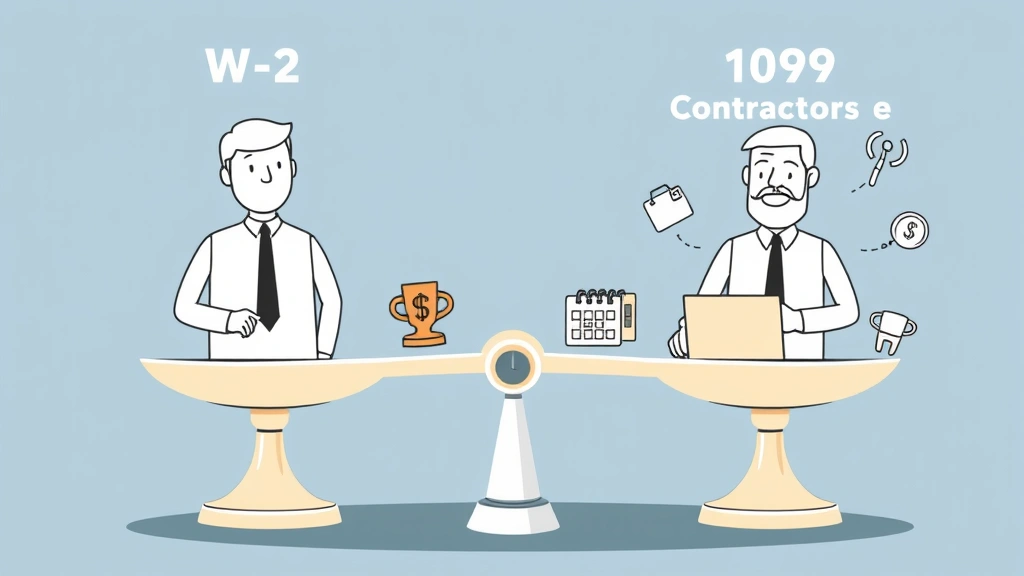
Understanding Your Tax Obligations
Tax obligations represent the most critical aspect of 1099 work that catches many new contractors off guard. When you receive a 1099, you’re responsible for calculating and paying federal income tax, state income tax (if applicable), Social Security tax, and Medicare tax. This differs dramatically from W-2 employment, where employers split these costs with you.
The IRS expects you to report all 1099 income on your tax return, even if you don’t receive a Form 1099 for every payment. If a client pays you less than $600 annually, they may not issue a 1099, but you still owe taxes on that income. Failure to report 1099 income is considered tax evasion and can result in serious penalties, interest charges, and potential legal consequences.
You’ll need to file Schedule C (Profit or Loss from Business) with your 1040 tax return. This form allows you to deduct legitimate business expenses, which significantly reduces your taxable income. Tax experts strongly recommend keeping meticulous records of all income and expenses throughout the year rather than scrambling during tax season. Digital accounting tools make this process manageable, even for those without accounting backgrounds.
Deductions and Business Expenses
One major advantage of 1099 work is the ability to deduct legitimate business expenses, substantially lowering your tax burden. The IRS allows deductions for any ordinary and necessary expense related to your business operations. Understanding what qualifies is essential for maximizing your tax benefits legally.
Common deductible expenses include:
- Home office deduction: If you maintain a dedicated workspace, you can deduct a portion of rent, utilities, and home maintenance proportional to your office space
- Equipment and supplies: Computers, software, office furniture, and professional tools directly related to your work
- Professional services: Accounting fees, legal consultation, and bookkeeping services
- Health insurance: Self-employed health insurance premiums are fully deductible
- Vehicle expenses: Mileage for business-related travel or vehicle operating costs
- Education and training: Courses and certifications that maintain or improve skills in your field
- Subscriptions and memberships: Professional memberships, software subscriptions, and industry publications
- Marketing and advertising: Website hosting, business cards, and promotional materials
Tax experts emphasize the importance of distinguishing between personal and business expenses. You cannot deduct your entire home utility bill just because you work from home; you must calculate the percentage of your home dedicated to business use. The IRS scrutinizes excessive deductions, particularly home office deductions, so maintain documentation supporting every claim. Keep receipts, invoices, and records for at least three to seven years in case of audits.
Quarterly Estimated Tax Payments
Perhaps the most challenging aspect of 1099 work for new contractors is managing quarterly estimated tax payments. Unlike W-2 employees who have taxes withheld automatically from each paycheck, contractors must submit estimated tax payments to the IRS every three months. Missing these payments can result in penalties and interest charges.
Quarterly estimated taxes are due on April 15, June 15, September 15, and January 15 of the following year. You’ll file Form 1040-ES with your estimated payment. Calculating the correct amount requires predicting your annual income, which can be difficult when starting out or when income fluctuates significantly.
Tax professionals recommend calculating quarterly payments based on your previous year’s tax liability or your current year’s projected income, whichever is higher. If you expect significant income changes, adjust your quarterly payments accordingly to avoid underpayment penalties. Many contractors set aside 25-30% of their gross income in a separate savings account throughout the year to ensure they have funds available when quarterly payments come due.
Self-Employment Tax Explained
Self-employment tax is perhaps the most surprising tax burden for new 1099 contractors. This tax covers Social Security and Medicare contributions. As a W-2 employee, your employer pays half of these taxes (7.65%) while you pay the other half; as a contractor, you pay both portions, totaling approximately 15.3% of your net self-employment income.
The self-employment tax calculation is complex because you only pay it on 92.35% of your net business income (the IRS allows a deduction for half of your self-employment tax). For example, if you earn $50,000 in 1099 income with $10,000 in deductible expenses, your net income is $40,000. You’d calculate self-employment tax on approximately $36,940, resulting in a self-employment tax of roughly $5,250.
You can deduct half of your self-employment tax when calculating your adjusted gross income, which provides some relief. However, this remains a significant expense that many new contractors underestimate. Tax experts recommend setting aside 15-20% of gross income specifically for self-employment tax, in addition to income tax withholding reserves.
Understanding self-employment tax is crucial when comparing 1099 compensation to W-2 salaries. A $60,000 1099 contract is not equivalent to a $60,000 W-2 salary because you’ll pay substantially more in taxes and lose employer-provided benefits. When evaluating 1099 job opportunities, factor in these additional tax obligations.
Advantages of 1099 Work
Despite the tax complexities, 1099 work offers significant advantages that attract millions of workers. The primary benefit is flexibility. You control your schedule, choose your clients, and determine how much you work. This autonomy appeals to parents, students, and anyone seeking work-life balance that traditional employment cannot provide.
Financial potential is another major advantage. Without employer overhead costs, many 1099 contractors earn more per hour than W-2 employees in comparable positions. You can raise rates as your experience grows, negotiate directly with clients, and take on multiple income streams simultaneously. Successful contractors often earn substantially more than their W-2 counterparts.
Professional growth and skill development accelerate when working with diverse clients across different projects. You build a broader network, gain varied experience, and develop entrepreneurial skills that enhance long-term career prospects. Additionally, 1099 work allows you to pursue passion projects and build personal brands that might not be possible in traditional employment.
Tax deductions provide legitimate ways to reduce your tax burden. When structured properly, business expenses significantly lower your taxable income. You also have control over your business structure; many contractors eventually establish S-corps or LLCs to optimize tax efficiency, which tax professionals can help arrange.
Disadvantages and Challenges
The disadvantages of 1099 work are equally significant and deserve serious consideration. The most obvious drawback is the lack of employee benefits. You receive no health insurance, dental coverage, vision insurance, or retirement plan contributions from clients. You must purchase individual health insurance, which is typically more expensive than employer group plans. This cost, while partially deductible, represents a substantial burden.
Income instability is another major challenge. 1099 work rarely provides consistent, predictable income. Clients may reduce projects, delay payments, or disappear entirely. Building financial reserves to weather slow periods is essential but difficult for those living paycheck to paycheck. This unpredictability makes budgeting, loan applications, and financial planning significantly more challenging.
Administrative burden increases substantially as a contractor. You must manage invoicing, track business expenses, handle your own accounting, and navigate complex tax requirements. While software tools help, this responsibility consumes time and energy that W-2 employees never encounter. Many contractors spend 5-10% of their time on administrative tasks rather than billable work.
Legal protection is minimal in 1099 relationships. You have no workers’ compensation coverage if injured, no unemployment insurance eligibility if work disappears, and no legal protections against wage theft that W-2 employees enjoy. Clients can terminate your relationship at will without notice or severance.
The lack of paid time off is often overlooked but significant. You don’t earn sick days, vacation days, or paid holidays. When you’re not working, you’re not earning. This means taking time off requires financial planning and impacts your annual income substantially.
Finding 1099 Jobs
Finding quality 1099 positions requires different strategies than traditional job searching. Freelance platforms like Upwork, Fiverr, and Toptal connect contractors with clients worldwide. These platforms handle some administrative aspects but typically take significant commission percentages (20-30%).
Industry-specific job boards are often more lucrative. Depending on your field, specialized platforms connect you directly with clients without intermediaries. Construction contractors often find work through industry networks, as discussed in our guide to construction industry jobs. Writers, designers, and consultants can find work through LinkedIn, industry associations, and professional networks.
Networking remains one of the most effective methods for finding consistent 1099 work. Building relationships with former colleagues, clients, and industry contacts often leads to repeat business and referrals. Many successful contractors report that 50-80% of their work comes from existing networks rather than job boards.
You might also explore roles that offer flexibility similar to 1099 work. Some employers offer jobs with tuition assistance, which provide benefits while maintaining flexibility. These hybrid opportunities can bridge the gap between traditional employment and independent contracting.
Creating a professional website and online presence helps attract clients directly. Demonstrating your expertise through portfolio pieces, blog posts, and case studies builds credibility and generates inbound inquiries, reducing your dependence on platforms and networks.
FAQ
What’s the difference between a 1099 and W-2 employee?
W-2 employees work for a company that withholds taxes, provides benefits, and assumes certain legal responsibilities. 1099 contractors are self-employed; they manage their own taxes, benefits, and legal obligations. The company has less control over how contractors work and doesn’t provide employment benefits.
Can I switch from 1099 to W-2 work?
Absolutely. Many people transition between contractor and employee roles throughout their careers. Some work both simultaneously, maintaining contractor clients while employed full-time. This hybrid approach provides income stability while building a client base.
What happens if I don’t pay quarterly estimated taxes?
The IRS assesses penalties and interest on underpaid quarterly estimates. The penalties accumulate throughout the year, making the problem worse over time. If you realize you’ve made underpayment errors, consult a tax professional immediately to minimize additional penalties.
How much should I charge as a 1099 contractor?
Rates depend on your experience, industry, location, and market demand. Research comparable rates in your field, factor in taxes and business expenses (add 25-40% above what you’d need as a W-2 employee), and adjust based on client value. Many contractors increase rates 10-15% annually as they gain experience.
Do I need a business license for 1099 work?
Requirements vary by location and industry. Some jurisdictions require business licenses for any self-employed person; others don’t. Check your local requirements, as operating without required licenses can result in fines. Establishing an LLC or S-corp typically requires formal registration but provides additional tax and legal benefits.
Can I claim my home office if I work from home?
Yes, but only the portion of your home dedicated exclusively to business. Calculate the percentage of your home’s square footage used for your office and deduct that same percentage of rent/mortgage, utilities, and maintenance. Keep detailed records supporting your calculation.
What tax software should I use for 1099 income?
Popular options include TurboTax Self-Employed, H&R Block Premium, and TaxAct. Tax professionals often recommend working with a CPA or tax advisor if your situation is complex. Software works well for straightforward situations but may miss optimization opportunities a professional would identify.
How do I handle multiple 1099 clients?
Track income from each client separately for accounting purposes. Report all 1099 income on Schedule C regardless of how many clients you have. Managing multiple clients requires clear invoicing systems, separate profit tracking, and potentially separate business accounts to maintain organization.