
1099 Jobs Explained: Freelancer Insights
The gig economy has transformed how people work, and 1099 jobs represent one of the most flexible employment arrangements available today. Whether you’re considering transitioning to freelance work or exploring independent contracting, understanding what a 1099 job entails is essential for making informed career decisions. Named after the IRS tax form used to report non-employee compensation, 1099 positions offer unique advantages and challenges that differ significantly from traditional W-2 employment.
In this comprehensive guide, we’ll explore what 1099 jobs are, how they differ from conventional employment, and provide practical insights to help you succeed in the freelance marketplace. If you’re curious about alternative employment arrangements, you might also want to explore jobs with signing bonuses or traditional roles that might offer different benefits structures.
What Are 1099 Jobs?
A 1099 job is an independent contracting position where you work as a self-employed professional rather than as a direct employee of a company. The term comes from the IRS Form 1099-NEC (Nonemployee Compensation), which companies use to report payments made to independent contractors. Unlike traditional employees who receive a W-2 form, 1099 contractors are responsible for tracking their own income and managing their tax obligations.
1099 positions span virtually every industry and skill level. Common examples include freelance writing, graphic design, software development, marketing consulting, virtual assistance, bookkeeping, and project management. Some people work with a single long-term client, while others juggle multiple projects simultaneously. The defining characteristic is that you control how, when, and where you work, within the parameters agreed upon in your contract.
The relationship between a 1099 contractor and a hiring company is fundamentally different from employment. The company isn’t your employer—they’re your client. This distinction has significant implications for benefits, taxes, legal protections, and work arrangements. Understanding this relationship helps you navigate the unique landscape of freelance work effectively.

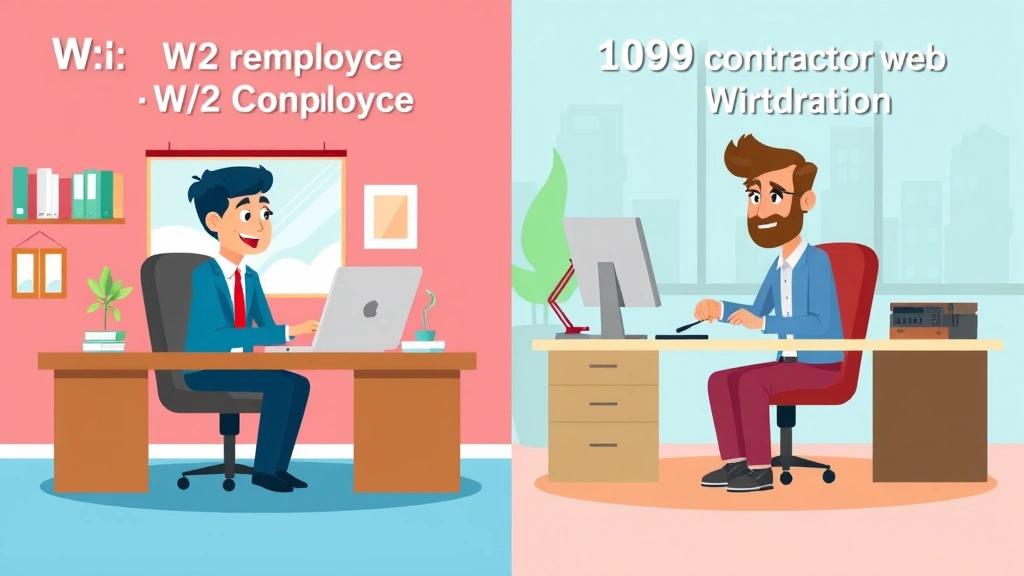
1099 vs. W-2 Employment: Key Differences
Understanding how 1099 work differs from traditional W-2 employment is crucial for anyone considering the transition. Here are the primary distinctions:
- Tax Responsibility: W-2 employees have taxes withheld by their employer. 1099 contractors must pay estimated quarterly taxes and are responsible for both employer and employee portions of Social Security and Medicare taxes (self-employment tax), typically around 15.3%.
- Benefits: W-2 employees typically receive health insurance, retirement plans, paid time off, and workers’ compensation. 1099 contractors must secure and pay for these benefits independently.
- Work Control: Employers direct how W-2 employees perform their work. 1099 contractors have autonomy over methods and schedules, as long as they meet contractual deliverables.
- Legal Protections: W-2 employees receive unemployment insurance, workers’ compensation, and protections under employment laws. 1099 contractors have limited legal protections and cannot collect unemployment benefits.
- Equipment and Expenses: Employers typically provide tools and equipment for W-2 employees. 1099 contractors purchase their own and can deduct business expenses from income.
- Job Security: W-2 positions offer more stability, while 1099 contracts can end suddenly and may be project-based.
If you’re managing stress related to employment uncertainty, our guide on how to deal with job stress offers practical strategies for maintaining wellbeing in any work situation.
Advantages of 1099 Freelance Work
Despite the challenges, thousands of professionals choose 1099 work for compelling reasons:
- Flexibility and Autonomy: You control your schedule, workspace, and work methods. This freedom appeals to parents, students, and those seeking work-life balance. You can work early mornings, late nights, or weekends based on your preferences.
- Income Potential: Without employer overhead constraints, you can often earn more than equivalent W-2 positions. You set your rates based on market demand, expertise, and project complexity. Many experienced freelancers earn significantly higher hourly rates than traditional employees.
- Diverse Project Portfolio: Working with multiple clients exposes you to varied industries, challenges, and learning opportunities. This diversity keeps work engaging and builds a broader skill set.
- Tax Deductions: Business expenses are deductible, including home office space, equipment, software subscriptions, professional development, and travel. These deductions can substantially reduce your taxable income.
- Career Control: You decide which projects to accept, which clients to work with, and how to develop your career. This autonomy can be incredibly satisfying for self-motivated professionals.
- Entrepreneurial Mindset: Running your own freelance business teaches valuable skills in marketing, client relations, financial management, and business development.
Challenges and Considerations
The freedom of 1099 work comes with significant responsibilities and challenges:
- Inconsistent Income: Unlike regular paychecks, freelance income fluctuates. Slow periods can strain finances, requiring careful budgeting and emergency savings.
- No Benefits: You must independently purchase health insurance, retirement plans, and disability insurance. These costs can be substantial and must be factored into your pricing.
- Self-Employment Taxes: The self-employment tax burden is considerable. You’ll owe approximately 15.3% in Social Security and Medicare taxes on top of income taxes.
- Isolation: Working independently can feel lonely compared to office environments. Building community and maintaining professional connections requires intentional effort.
- Client Acquisition: Finding consistent work requires ongoing marketing and networking. Feast-or-famine cycles are common in freelancing.
- Administrative Burden: You handle invoicing, expense tracking, tax preparation, and contract negotiations. Many freelancers hire accountants or bookkeepers, adding to expenses.
- Limited Legal Protections: You have fewer protections against non-payment, scope creep, or unfair contract terms. Clear contracts are essential.
Tax Obligations for 1099 Contractors
Understanding and managing tax obligations is critical for 1099 contractors. Here’s what you need to know:
Self-Employment Tax: As a self-employed individual, you pay both the employer and employee portions of Social Security and Medicare taxes. For 2024, this totals 15.3% (12.4% Social Security on the first $168,600 of earnings and 2.9% Medicare on all earnings, plus an additional 0.9% Medicare tax on earnings over certain thresholds).
Quarterly Estimated Taxes: Rather than having taxes withheld throughout the year, you must pay estimated taxes quarterly (April 15, June 15, September 15, and January 15). Underestimating can result in penalties and interest.
Deductible Expenses: Maximize your deductions by tracking business-related expenses including home office space (if you have a dedicated workspace), equipment and software, professional development, client entertainment, travel, and health insurance premiums. Keep detailed records and receipts for all expenses.
Record Keeping: Maintain organized records of all income and expenses. Many freelancers use accounting software like QuickBooks, FreshBooks, or Wave. These tools simplify tax preparation and provide valuable financial insights.
Form 1099-NEC: Clients who pay you $600 or more in a calendar year must send you a Form 1099-NEC by January 31st. You’ll receive copies to include with your tax return. Report all income, even if you don’t receive a 1099.
Tax Planning: Consider consulting with a tax professional or CPA experienced with freelancers. They can help you optimize your tax strategy, set aside appropriate amounts, and ensure compliance. The cost of professional tax help often pays for itself through identified deductions and optimized strategies.
Finding and Landing 1099 Jobs
Successfully finding 1099 work requires strategic effort and consistent marketing. Here are proven approaches:
Freelance Platforms: Websites like Upwork, Fiverr, Toptal, Guru, and PeoplePerHour connect freelancers with clients. These platforms handle some administrative work but typically take a commission (5-20%). Build a compelling profile highlighting your expertise, portfolio samples, and client testimonials.
Job Boards: General job boards like Indeed, FlexJobs, and LinkedIn often list 1099 positions. You can also find specialized boards for your industry. Check our 1099 job listings for opportunities in your field, and explore other available 1099 positions regularly.
Direct Outreach: Identify companies or professionals you’d like to work with and pitch your services directly. A personalized email explaining how you can solve their problems is often more effective than generic applications.
Networking: Attend industry conferences, join professional associations, and participate in online communities related to your field. Many freelance opportunities come through referrals and relationships. LinkedIn is particularly valuable for building professional connections and finding clients actively seeking contractors.
Referral Programs: Encourage satisfied clients to refer you to others. Consider offering referral incentives. Word-of-mouth remains one of the most effective client acquisition methods.
Portfolio Development: Maintain a professional website showcasing your best work, case studies, and client testimonials. A strong portfolio demonstrates expertise and builds credibility with potential clients.
Content Marketing: Writing blog posts, creating videos, or sharing insights on social media establishes authority in your field and attracts potential clients organically.
Building Your Freelance Career
Transitioning to sustained 1099 work requires strategic planning and professional development:
Financial Foundation: Before going full-time freelance, build an emergency fund covering 6-12 months of expenses. This buffer helps you navigate slow periods without panic or desperation pricing. Also, set aside 25-30% of gross income for taxes and self-employment taxes before spending it.
Rate Setting: Research market rates for your skill level and location. Calculate your desired annual income, factor in business expenses, taxes, and non-billable time, then divide by billable hours to determine appropriate rates. Don’t undercut your value—clients often equate low prices with low quality.
Contract Fundamentals: Use clear, professional contracts for every engagement. Contracts should specify scope of work, deliverables, timeline, payment terms, revision limits, and intellectual property rights. Legal templates are available online, or consider consulting an attorney for complex arrangements.
Client Relations: Treat clients professionally and communicate clearly. Set expectations upfront about communication, revision rounds, and project timelines. Maintain professional boundaries and deliver on commitments. Strong relationships lead to repeat business and referrals. When concluding projects, professional thank you letters help maintain positive relationships.
Continuous Learning: Invest in skill development to stay competitive. Take online courses, attend workshops, read industry publications, and experiment with emerging tools and techniques. Your expertise is your most valuable asset.
Business Structure: Consider forming an LLC or S-corp for liability protection and potential tax benefits. Consult with a business attorney or accountant about the best structure for your situation. This also adds professionalism when dealing with clients.
Scaling Your Business: As you gain experience, explore ways to scale—raising rates, specializing in high-demand niches, productizing services, or hiring subcontractors. Not all freelancers want to scale, but understanding options helps you make intentional career choices.
Health Insurance: Explore options including marketplace plans, professional association plans, or spousal coverage. Budget for premiums, deductibles, and out-of-pocket costs. This is often one of the largest expenses for freelancers.
Retirement Planning: Without employer retirement plans, you must establish your own. Options include SEP-IRA, Solo 401(k), or individual IRA. Contribute consistently to build long-term security.
FAQ
What does 1099 mean exactly?
The term “1099” refers to the IRS Form 1099-NEC (Nonemployee Compensation) used to report income paid to independent contractors. It’s a shorthand way of referring to independent contractor relationships where you’re not an employee and don’t receive a W-2.
Can I work multiple 1099 jobs simultaneously?
Yes, absolutely. Many freelancers work with multiple clients concurrently. Just ensure you can meet all contractual obligations and manage your time effectively. Some contracts may restrict working with competitors, so review terms carefully.
How much should I charge for 1099 work?
Research your market based on experience level, geographic location, and industry. Consider your desired annual income, business expenses, taxes, and non-billable time. Experienced freelancers often charge $50-150+ per hour, while rates vary significantly by field. Don’t undervalue your expertise.
Do I need to pay quarterly taxes?
Yes, if you expect to owe $1,000 or more in taxes for the year, you should pay quarterly estimated taxes. Failure to do so results in penalties and interest. Most 1099 contractors benefit from quarterly payments to avoid a large bill at tax time.
What benefits can I deduct as a 1099 contractor?
You cannot deduct personal health insurance premiums as business expenses, but you can deduct them as a self-employed health insurance deduction on your personal tax return. You can deduct business-related expenses like equipment, software, office supplies, professional development, and a portion of home office costs.
Is 1099 work more risky than W-2 employment?
1099 work carries different risks than W-2 employment. You have income variability, fewer legal protections, and must manage your own benefits. However, many people find the autonomy and income potential outweigh these risks. Proper planning and financial management mitigate much of the risk.
Can I transition from W-2 to 1099 work gradually?
Yes, many professionals start freelancing part-time while maintaining a W-2 job. This approach lets you test the waters, build a client base, and develop systems before relying entirely on freelance income. Once freelance income becomes consistent and substantial, you can transition fully.
What should a 1099 contract include?
Essential contract elements include scope of work, deliverables, timeline and deadlines, payment amount and terms, revision limits, intellectual property ownership, confidentiality clauses, termination conditions, and dispute resolution procedures. Clear contracts protect both parties and prevent misunderstandings.
How do I handle non-payment as a 1099 contractor?
Protect yourself by requiring deposits or milestone payments, using clear invoices with payment terms, and following up promptly on overdue payments. If payment issues occur, send formal payment reminders, document everything, and consider legal action if necessary. Some freelancers use escrow services or payment platforms that hold funds until work is approved.
Can I get unemployment benefits if my 1099 contract ends?
Generally, no. 1099 contractors are self-employed and typically don’t qualify for unemployment benefits. Some states have expanded benefits for gig workers, so check your local regulations. This is another reason to maintain an emergency fund.


