
1099 Jobs Explained: Financial Advisor Insight
Understanding 1099 jobs is essential for anyone considering independent contracting or self-employment. Unlike traditional W-2 employment, 1099 positions offer flexibility, autonomy, and the potential for higher earnings—but they also come with unique financial and legal responsibilities. Whether you’re a financial professional exploring contract work or someone curious about the gig economy, this comprehensive guide breaks down everything you need to know about 1099 employment.
The 1099 classification gets its name from the IRS Form 1099-NEC (Nonemployee Compensation), which businesses file to report payments made to independent contractors. This employment model has grown exponentially over the past decade, reshaping how companies hire talent and how workers approach their careers. Understanding the nuances of 1099 work—from tax implications to benefits planning—can help you make informed decisions about your professional future.

What is a 1099 Job?
A 1099 job is a position where you work as an independent contractor rather than an employee. The term refers to the IRS Form 1099-NEC that companies must file when paying you $600 or more annually. In this arrangement, you’re essentially running your own business and providing services to one or more clients.
1099 contractors maintain control over how they complete their work, set their own schedules (within client requirements), and often work remotely. This classification spans virtually every industry—from technology and consulting to writing, design, and financial services. The flexibility appeals to many professionals, but it requires a different mindset regarding income stability, taxes, and business management.
Unlike employees who receive regular paychecks with taxes withheld, 1099 contractors receive the full payment and are responsible for managing their own tax obligations. This distinction fundamentally changes how you approach financial planning and business operations.
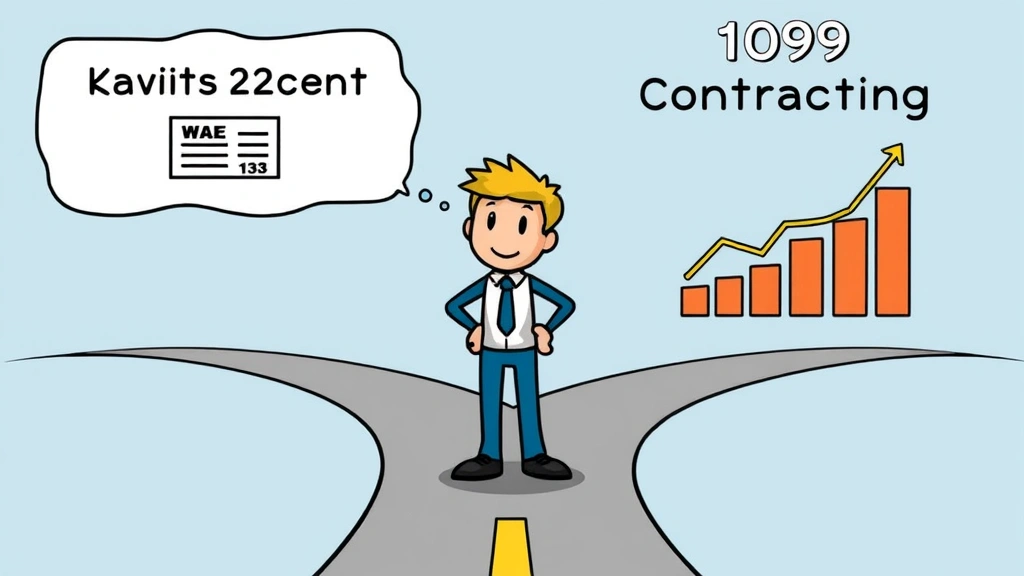
Key Differences Between 1099 and W-2 Employment
Understanding the distinctions between 1099 and W-2 work is crucial for evaluating opportunities. A W-2 employee receives a regular salary or hourly wage with employer withholding for federal income tax, Social Security, and Medicare. The employer covers half of payroll taxes and typically provides benefits like health insurance, retirement plans, and paid time off.
Control and Independence: W-2 employees work under direct supervision with set schedules and defined job duties. 1099 contractors have significant autonomy in how they work, though they must meet client deliverables. This independence is attractive to self-directed professionals but requires strong self-management.
Income Stability: W-2 positions offer predictable paychecks and job security protections. 1099 work is project-based, meaning income fluctuates based on available contracts. Financial advisors typically recommend building 6-12 months of emergency savings before transitioning to contracting.
Benefits and Protections: W-2 employees enjoy employer-sponsored benefits, unemployment insurance eligibility, and workers’ compensation coverage. 1099 contractors must secure their own health insurance, retirement savings, and liability protection. When considering a 1099 opportunity, factor in the cost of benefits you’ll need to purchase independently.
Tax Responsibilities: W-2 employers withhold and remit taxes automatically. 1099 contractors must calculate quarterly estimated tax payments and file self-employment taxes, which include both employer and employee portions of Social Security and Medicare taxes—a combined 15.3% rate.
Deductions and Expenses: W-2 employees can only claim the standard deduction. 1099 contractors can deduct legitimate business expenses, including home office space, equipment, software, professional development, and a portion of health insurance premiums. These deductions can significantly reduce taxable income.
Tax Obligations for 1099 Contractors
Managing taxes as a 1099 contractor requires proactive planning and organization. The IRS expects you to pay income taxes throughout the year via quarterly estimated tax payments, rather than waiting until April 15th. Missing these payments can result in penalties and interest charges.
Quarterly Estimated Taxes: You must file Form 1040-ES and submit payments on April 15, June 15, September 15, and January 15. Calculate your expected annual income, subtract estimated deductions, and divide by four. Many contractors use accounting software or work with CPAs to ensure accuracy.
Self-Employment Tax: As a 1099 contractor, you pay both the employee and employer portions of Social Security and Medicare taxes—15.3% of net earnings. This is substantially higher than the 7.65% W-2 employees pay. However, you can deduct the employer-equivalent portion (7.65%) on your income tax return.
Record Keeping: Maintain meticulous records of all income and business expenses. The IRS requires documentation for deductions, so keep receipts, invoices, and bank statements. Use accounting software like QuickBooks or Wave to track income and expenses throughout the year.
Annual Filing: File your tax return with Schedule C (Profit or Loss from Business) and Schedule SE (Self-Employment Tax). A CPA experienced with contractor taxation can help optimize deductions and ensure compliance. The cost of professional tax preparation typically pays for itself through maximized deductions.
Understanding how to deal with job stress becomes especially important when managing the additional administrative responsibilities of 1099 work alongside client deliverables.
Financial Planning for Independent Contractors
Successful 1099 contractors treat their work as a legitimate business, not just a side gig. This requires disciplined financial management and strategic planning. According to the IRS Small Business resources, independent contractors must maintain separate business finances and comprehensive records.
Pricing Your Services: Determine competitive rates by researching industry standards and considering your experience level. Many contractors use hourly rates, project-based pricing, or retainer models. Factor in taxes (25-30% of gross income for self-employment and income taxes), benefits costs, and business expenses when setting rates. A $50/hour W-2 job typically requires $65-75/hour contractor rates to maintain equivalent take-home pay.
Emergency Fund: Build a cash reserve covering 6-12 months of living expenses before relying solely on 1099 income. Contract work is inherently less stable than employment, and gaps between projects are common. This buffer prevents financial stress during slow periods and allows you to decline unfavorable contracts.
Health Insurance: Research marketplace plans through Healthcare.gov or trade association group plans. Self-employed individuals can deduct 100% of health insurance premiums on Schedule C, reducing taxable income. Factor this cost into your pricing structure.
Retirement Planning: Without employer 401(k) matches, you must establish your own retirement savings. Options include:
- SEP IRA: Allows contributions up to 25% of net self-employment income (maximum $66,000 in 2024)
- Solo 401(k): Permits both employee and employer contributions (maximum $69,000 in 2024)
- Simple IRA: Good for those expecting modest income (maximum $16,000 in 2024)
Prioritize retirement contributions early to benefit from compound growth over decades. Many financial advisors recommend saving 10-15% of gross income for retirement.
Liability Insurance: Depending on your field, professional liability insurance protects against claims of negligence or errors. This is especially important in financial services, consulting, and technical fields. Annual premiums typically range from $500-2,000.
Finding and Securing 1099 Opportunities
Locating quality 1099 work requires different strategies than traditional job hunting. While preparing for a career fair focuses on networking and personal connections, 1099 opportunities often come through online platforms, referrals, and direct outreach.
Online Platforms: Websites like Upwork, Toptal, Fiverr, and industry-specific platforms connect contractors with clients. Build a compelling profile highlighting your expertise, portfolio, and client testimonials. Start with competitive pricing to build reviews, then gradually increase rates as you establish a reputation.
Networking: Many lucrative 1099 contracts come through professional relationships. Attend industry events, maintain LinkedIn connections, and nurture relationships with former colleagues. Let your professional network know you’re available for contract work.
Direct Outreach: Research companies using contractors in your field and pitch your services directly. Personalized cold emails highlighting specific value you can provide often yield better results than generic applications.
Agencies and Staffing Firms: Contract staffing agencies specialize in placing independent contractors. They handle client relationships and administrative details, though they typically take a commission (10-25% of your rate).
Industry Associations: Professional organizations often maintain job boards and networking opportunities. These tend to feature higher-quality opportunities than general platforms.
Developing strong interview preparation skills remains valuable, as many 1099 opportunities involve initial client meetings or proposals to demonstrate your qualifications.
Advantages and Disadvantages
Advantages of 1099 Work:
- Flexibility: Control your schedule and work environment (home office, coffee shop, etc.)
- Higher Earning Potential: Rates typically exceed W-2 salaries when factoring in additional benefits costs
- Diverse Projects: Work with multiple clients and industries, expanding your skills and network
- Tax Deductions: Legitimate business expenses reduce taxable income significantly
- Independence: Make decisions about your work methods and client selection
- Scalability: Grow income by taking additional projects or increasing rates
Disadvantages of 1099 Work:
- Income Instability: Earnings fluctuate based on available projects and market conditions
- No Benefits: You pay 100% of health insurance, retirement, and other benefits
- Higher Taxes: Self-employment tax adds 15.3% on top of income tax obligations
- Administrative Burden: Manage invoicing, tax filing, and business operations independently
- No Job Security: Clients can terminate contracts with minimal notice
- Isolation: Working independently can feel lonely compared to office environments
- No Paid Time Off: Vacation and sick days don’t generate income
Legal Considerations and Worker Classification
The IRS uses specific criteria to distinguish independent contractors from employees. Misclassification carries serious penalties for both employers and workers, so understanding these rules protects you legally and financially.
IRS Classification Test: The IRS examines three primary factors:
- Behavioral Control: Does the client dictate how, when, and where work is performed? Independent contractors maintain control over methods and schedules.
- Financial Control: Does the contractor invest in tools/equipment, set their own rates, and work for multiple clients? Employees typically receive company-provided resources.
- Relationship: Is there an ongoing relationship or specific project? Contractors typically work on defined projects; employees have indefinite relationships.
If a client treats you as an employee (dictating hours, providing equipment, supervising closely), you may be misclassified. This can result in the IRS reclassifying the relationship, requiring the employer to pay back payroll taxes, penalties, and interest. Consult a tax attorney if you suspect misclassification.
Contract Agreements: Always use written contracts specifying scope of work, payment terms, deliverables, timeline, and intellectual property rights. Clear contracts prevent misunderstandings and provide legal protection. Many contractors use template agreements and customize them for specific projects.
State Laws: Some states have additional worker classification rules. California’s AB-5 law, for example, uses stricter criteria for contractor classification. Research your state’s requirements to ensure compliance.
Understanding legal aspects of career transitions, similar to exploring jobs in media and communications, ensures you make informed decisions about your professional direction.
FAQ
What’s the difference between a 1099 and a W-2 job?
A W-2 job is traditional employment where the employer withholds taxes and provides benefits. A 1099 job is independent contracting where you manage your own taxes, benefits, and business operations. 1099 contractors have more flexibility but less stability and fewer benefits.
Do I need to pay quarterly taxes as a 1099 contractor?
Yes, the IRS expects 1099 contractors to pay estimated taxes quarterly using Form 1040-ES. If you expect to owe $1,000 or more when filing your annual return, you must make quarterly payments or face penalties and interest.
What business expenses can I deduct as a 1099 contractor?
Legitimate business expenses include home office space, equipment, software subscriptions, professional development, business insurance, and travel related to client work. You can also deduct 100% of self-employed health insurance premiums and 50% of self-employment taxes on your income tax return.
How do I set my rates as a 1099 contractor?
Research industry standards for your field and experience level. Calculate your desired annual income, add 25-30% for self-employment taxes and benefits, divide by billable hours, and adjust based on market demand. Start competitively to build client relationships, then increase rates as you gain experience and testimonials.
Can I transition from W-2 to 1099 work?
Yes, many professionals successfully transition to contracting. Before making the switch, build a 6-12 month emergency fund, secure health insurance, set up accounting systems, and develop a client pipeline. Consider starting with part-time contracting while maintaining employment to test the model.
What type of health insurance should I get as a 1099 contractor?
Explore plans through Healthcare.gov marketplace, professional association group plans, or spouse’s employer coverage. Self-employed individuals can deduct 100% of health insurance premiums on Schedule C. Compare plans based on premiums, deductibles, and coverage for your anticipated healthcare needs.
Do 1099 contractors get unemployment benefits?
Generally, no. 1099 contractors are not eligible for traditional unemployment insurance. Some states offer Pandemic Unemployment Assistance (PUA) during crises, but this is temporary. This is why building emergency savings is crucial for contractors.
How do I find legitimate 1099 opportunities?
Use established platforms like Upwork, Toptal, and industry-specific job boards. Network through professional associations and LinkedIn. Reach out directly to companies in your field. Work with contract staffing agencies. Avoid opportunities requiring upfront payments or guaranteeing unrealistic income.
What should a 1099 contract include?
Key elements include scope of work, deliverables, timeline, payment terms and amount, intellectual property rights, confidentiality clauses, termination conditions, and dispute resolution procedures. Use written contracts for all projects to protect both parties and prevent misunderstandings.
Is 1099 work right for me?
1099 work suits independent, self-disciplined professionals comfortable with income variability and administrative responsibilities. If you prefer stable paychecks, comprehensive benefits, and clear work-life boundaries, traditional employment may be better. Consider your financial situation, personality, and career goals before transitioning to contracting.


