

1099 Jobs Explained: Expert Insights
The independent contractor landscape has transformed dramatically over the past decade, with 1099 jobs becoming an increasingly attractive option for professionals seeking flexibility, autonomy, and diverse income opportunities. Named after the tax form contractors receive from clients, 1099 positions represent a fundamental shift in how work gets done across industries. Unlike traditional W-2 employment, these roles offer freedom from corporate constraints but demand entrepreneurial thinking, financial discipline, and strategic planning.
Whether you’re considering transitioning to contract work, exploring high-demand jobs in 2025, or simply curious about alternative career paths, understanding the nuances of 1099 employment is essential. This comprehensive guide breaks down everything you need to know about independent contractor positions, from tax implications to finding legitimate opportunities.
What Is a 1099 Job?
A 1099 job is a contract position where you work as an independent contractor rather than an employee. The term derives from IRS Form 1099-NEC (Miscellaneous Income), which clients issue to contractors who earn $600 or more annually. In this arrangement, you’re essentially running your own business, contracting your services to companies on a project, part-time, or full-time basis without being classified as an employee.
The fundamental characteristic of 1099 work is independence. You control how, when, and where you complete assignments. You’re not entitled to employee benefits like health insurance, retirement contributions, or paid time off. Instead, you receive higher hourly rates or project fees to compensate for these absences. The relationship is purely transactional: you provide services, the client pays you, and both parties maintain flexibility to end the arrangement.
1099 positions span virtually every industry and skill level. From software development and graphic design to writing, consulting, and skilled trades, independent contracting has become mainstream. The gig economy growth reflects changing workforce preferences, with millions choosing contract work deliberately rather than by necessity.

Key Differences: 1099 vs. W-2 Employment
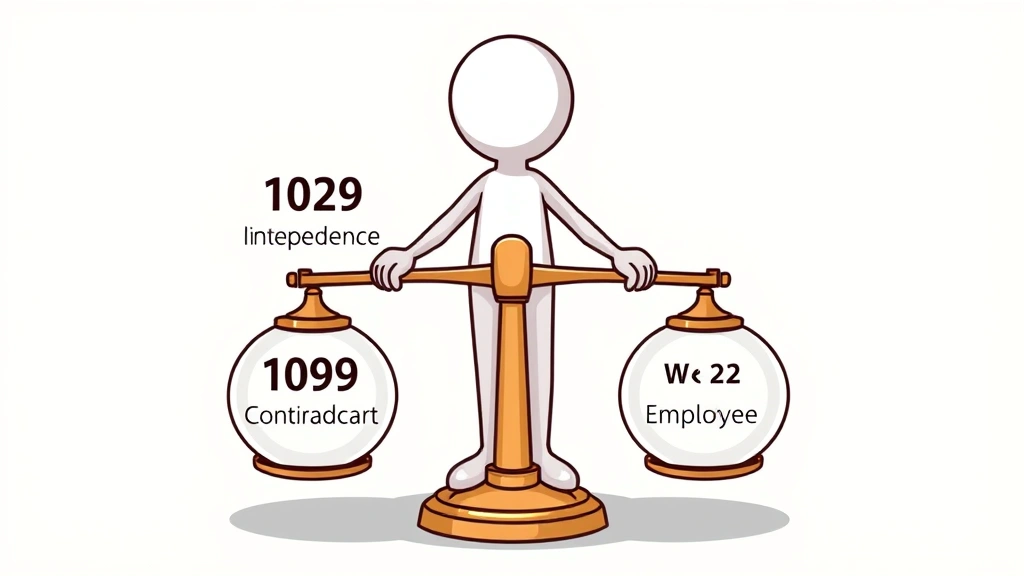
Understanding the distinctions between 1099 and traditional W-2 employment helps you make informed career decisions. The differences extend far beyond tax paperwork, affecting your financial security, benefits access, and daily work experience.
- Employment Classification: W-2 employees work directly for companies and receive regular paychecks with taxes withheld. 1099 contractors are self-employed, responsible for collecting payment and managing tax withholding independently.
- Benefits: W-2 positions typically include health insurance, dental, vision, retirement plans (401k), paid vacation, sick leave, and other perks. 1099 contractors receive none of these—they must purchase their own insurance and save independently.
- Income Stability: Employees receive guaranteed paychecks regardless of company performance. Contractors experience variable income based on project availability and client demand.
- Tax Responsibility: Employers withhold taxes from W-2 paychecks. Contractors must calculate and pay quarterly estimated taxes (Form 1040-ES) plus self-employment tax (15.3% on net earnings).
- Work Control: Employers dictate how, when, and where W-2 employees work. Contractors maintain autonomy over their work methods and schedules.
- Legal Protections: W-2 employees have labor law protections, unemployment insurance eligibility, and workers’ compensation coverage. Contractors have minimal protections and must handle their own liability insurance.
- Expense Deductions: Contractors can deduct home office, equipment, software, professional development, and other legitimate business expenses. W-2 employees face limited deduction opportunities.
When evaluating whether 1099 work suits your situation, honestly assess your financial cushion, risk tolerance, and desire for autonomy. Many professionals thrive with this arrangement; others find the uncertainty stressful.
Types of 1099 Opportunities
The breadth of 1099 positions is remarkable. Here’s how contract work divides across common categories:
Creative and Design: Graphic designers, web designers, UX/UI specialists, video editors, animators, and photographers frequently work as 1099 contractors. Clients appreciate the flexibility of bringing in specialized talent for specific projects without long-term commitments.
Technology and Development: Software developers, web developers, mobile app developers, data analysts, and IT consultants represent some of the highest-paid 1099 professionals. Tech companies particularly embrace contractor models for specialized skill sets and project-based work.
Writing and Content: Freelance writers, technical writers, copywriters, content strategists, and editors build sustainable 1099 careers. Content creation’s project-based nature makes it ideal for independent contracting. Our guide on careers in media and communications explores content-focused opportunities further.
Consulting: Business consultants, HR consultants, marketing strategists, and management consultants leverage expertise through 1099 arrangements. These roles typically command premium rates due to specialized knowledge and experience.
Administrative and Virtual Assistance: Virtual assistants, bookkeepers, executive assistants, and customer service professionals work remotely as contractors. This category offers accessible entry points for those building independent careers.
Skilled Trades: Plumbers, electricians, HVAC technicians, carpenters, and contractors operate primarily as 1099 workers. These roles require licensure and insurance but offer excellent income potential.
Education and Training: Online tutors, course instructors, corporate trainers, and subject matter experts deliver training via 1099 arrangements. The online learning explosion has created substantial demand in this sector.
Tax Obligations and Financial Management
Perhaps the most critical aspect of 1099 work is understanding tax implications. Many contractors underestimate their tax burden, leading to devastating surprises at tax time.
Self-Employment Tax: As a 1099 contractor, you pay both employee and employer portions of Social Security and Medicare taxes—15.3% combined on net earnings. W-2 employees split this with employers, but contractors bear the full burden. This alone significantly reduces take-home income compared to equivalent W-2 positions.
Income Tax Withholding: Unlike W-2 employees, nobody withholds federal or state income taxes from your payments. You must calculate quarterly estimated taxes using Form 1040-ES and pay them four times yearly (April 15, June 15, September 15, and January 15). Underestimating creates penalties and interest charges.
Deductible Expenses: The silver lining is substantial deduction opportunities. Legitimate business expenses reduce your taxable income:
- Home office (actual square footage or simplified $5 per square foot)
- Equipment and technology (computers, software, tools)
- Professional development (courses, certifications, conferences)
- Insurance (liability, health, disability)
- Vehicle expenses (mileage or actual expenses)
- Office supplies and materials
- Subscriptions and memberships
- Marketing and advertising
- Accounting and legal services
Record Keeping: Maintain meticulous records of all income and expenses. Use accounting software like QuickBooks Self-Employed, FreshBooks, or Wave to track everything. The IRS requires documentation for deductions, and poor records invite audits.
Professional Help: Consider hiring a CPA familiar with self-employed taxation. Their fees ($1,500-$3,000 annually) often pay for themselves through optimized deductions and strategy. They’ll also help establish quarterly payment amounts, preventing year-end surprises.
Finding Legitimate 1099 Positions
Locating genuine 1099 opportunities requires knowing where to look and recognizing red flags that indicate exploitative arrangements.
Freelance Platforms: Upwork, Fiverr, Freelancer, and Guru connect contractors with clients globally. These platforms handle payment processing and dispute resolution. Competition is fierce, but portfolio building opportunities abound. Start with smaller projects to establish reviews and reputation.
Job Boards: FlexJobs, Indeed, LinkedIn, and Craigslist list contract positions. Filter specifically for “1099” or “contract” positions. LinkedIn’s job search functionality lets you target remote and contract roles directly.
Professional Networks: Many 1099 opportunities come through personal connections. Inform your network that you’re available for contract work. Former colleagues, clients, and professional associations often know of opportunities before they’re publicly posted.
Industry-Specific Platforms: Depending on your field, specialized platforms exist. Designers use 99designs and Design Crowd. Writers find opportunities on Medium’s Partner Program, Contently, and Mediavine. Developers leverage GitHub, Stack Overflow Jobs, and specialized tech job boards.
Direct Client Outreach: If you have specific companies or industries in mind, research their contractor needs and pitch directly. This approach bypasses platform competition and often yields better rates.
Red Flags to Avoid: Legitimate clients provide clear contracts, reasonable payment terms, and professional communication. Beware of:
- Requests for upfront payments or “setup fees”
- Vague job descriptions with unrealistic pay
- Pressure to decide immediately
- Unwillingness to provide written contracts
- Payment methods involving gift cards or cryptocurrency exclusively
- Requests for personal financial information before employment
- Poor communication or unprofessional interactions
Negotiating 1099 Contracts
Contract negotiation determines your project success and financial outcomes. Many contractors accept initial offers without discussion, leaving money and protections on the table. Our comprehensive guide on negotiating job offers applies equally to 1099 arrangements.
Rate Determination: Calculate your required hourly or project rate by considering:
- Your experience level and expertise
- Market rates for your skill set and location
- Project complexity and timeline
- Revision and support requirements
- Payment terms and collection risk
- Benefits you’re not receiving (health insurance, retirement, paid time off)
A common formula: take your desired annual salary, add 25-30% for benefits and taxes you’ll pay, divide by billable hours (roughly 1,000-1,200 annually for sustainable workload). This reveals your minimum hourly rate. Adjust upward for specialized skills, high-demand expertise, or tight timelines.
Contract Essentials: Every 1099 arrangement requires a written contract including:
- Scope of work and deliverables
- Payment amount, schedule, and method
- Project timeline and deadlines
- Revision limits and change order procedures
- Intellectual property ownership
- Confidentiality and non-disclosure terms
- Termination conditions and notice periods
- Dispute resolution procedures
Payment Terms: Negotiate favorable payment terms. Requesting 50% upfront and 50% upon completion protects you from non-payment. For ongoing relationships, net-30 invoicing is standard, though you might request net-15 for better cash flow. Always require written payment terms in your contract.
Scope Creep Prevention: Clearly define what’s included and establish additional charges for out-of-scope work. Many contractors lose profitability to scope creep—clients requesting “just one more thing” repeatedly. Your contract should specify revision limits and additional work pricing.
Building a Sustainable 1099 Career
Short-term 1099 gigs can supplement income, but sustainable careers require strategic planning and professional development.
Diversify Income Sources: Avoid depending on single clients. If one client represents more than 30% of your income, you’re vulnerable. Develop multiple client relationships to smooth income fluctuations and reduce risk. This takes time but creates stability.
Build Your Brand: Invest in a professional website, portfolio, and online presence. Prospects evaluate contractors online before engaging. A polished brand commands higher rates and attracts better clients. Contribute to industry conversations through blogging, social media, or speaking to establish authority.
Continuous Learning: Industries evolve rapidly, especially in technology and creative fields. Dedicate time and resources to professional development. Certifications, courses, and skill updates keep you competitive and justify premium rates. The Coursera platform and similar services offer affordable upskilling opportunities.
Financial Discipline: Set aside 30-40% of income for taxes before spending anything. Many contractors fail because they treat all income as take-home money. Establish a separate business account and tax reserve account. This prevents financial crises when quarterly tax payments arrive.
Insurance and Legal Protection: Carry appropriate insurance. General liability insurance protects you if client work causes problems. Professional liability insurance covers claims of negligence or errors. Disability insurance replaces income if you can’t work due to illness or injury. These costs are business deductions, reducing taxable income.
Systems and Processes: Develop repeatable systems for invoicing, follow-up, and project management. Tools like Asana, Monday.com, and Notion streamline operations. Efficient systems increase billable hours and reduce administrative burden. They also impress clients with professionalism.
Client Relationships: Treat clients professionally even when frustrated. Reliable contractors who communicate clearly, deliver quality work on time, and handle problems gracefully get rehired and referred. Long-term client relationships beat constantly hunting new work. One satisfied client providing consistent projects beats five difficult clients requiring constant management.
Career Transitions: 1099 work doesn’t preclude returning to traditional employment. However, gaps in employment history can concern employers. Frame your contracting experience as relevant expertise and business ownership. If transitioning back to W-2 work, explore HR career opportunities or other fields where contract experience enhances candidacy.
Scaling Your Business: Eventually, successful contractors face choices: expand by hiring other contractors, focus on higher-value projects, or build passive income streams (courses, templates, digital products). Consider your goals and available energy before scaling.
FAQ
Do I need an LLC or business structure for 1099 work?
Not required, but often beneficial. Operating as a sole proprietor is simplest initially. As income grows, forming an LLC provides liability protection and tax benefits. Consult a CPA or tax attorney about your specific situation, as benefits vary by income level, industry, and location.
What if a client misclassifies me as an employee when I should be 1099?
This is illegal. Employers can’t arbitrarily classify workers as contractors to avoid benefits and taxes. If you believe misclassification occurred, file Form SS-8 with the IRS to request a determination. You can also contact your state’s labor department. Misclassification can result in the employer owing back taxes and penalties.
How do I handle health insurance as a 1099 contractor?
Options include marketplace plans (healthcare.gov), spouse’s employer plan, professional association plans, or health sharing ministries. Many contractors budget $300-$600 monthly for individual coverage. Self-employed health insurance premiums are deductible, reducing taxable income. Factor insurance costs into your rate calculations.
Can I claim a home office deduction?
Yes. Use either the simplified method ($5 per square foot, maximum 300 square feet for $1,500 deduction) or actual expense method (calculate percentage of home used for business and deduct that percentage of mortgage/rent, utilities, insurance, repairs). The actual method typically yields larger deductions but requires detailed record-keeping.
What happens if I don’t pay quarterly taxes?
The IRS assesses penalties and interest on underpayment. Even worse, you’ll owe everything at tax time. Underestimating creates cash flow crises. Use Form 1040-ES to calculate requirements based on expected annual income. If income varies significantly, adjust quarterly estimates accordingly.
How do I know what rate to charge?
Research your industry’s market rates using Glassdoor, PayScale, industry surveys, and peer conversations. Consider your experience, location, and specialization. Calculate your minimum rate using the formula mentioned earlier. Start at market rate and increase as you gain testimonials and reputation. Never undercut severely—it attracts problematic clients and devalues your expertise.
Should I sign non-compete agreements as a contractor?
Approach these cautiously. Non-competes can prevent you from working with competitors or similar clients, limiting your income opportunities. Negotiate restrictions to be reasonable in scope, geography, and duration. Never accept indefinite or overly broad non-competes. Consult an attorney if terms seem restrictive.
How long should I keep financial records?
Keep all records at least seven years. The IRS can audit up to three years typically, but six years if they suspect underreporting of income, and indefinitely if they suspect fraud. Organized records protect you during audits and help you track performance over time.
Can I transition from 1099 to W-2 employment?
Absolutely. Frame your contractor experience as entrepreneurial expertise and independent project management. Highlight specific accomplishments, technologies learned, and business growth. Many employers value the self-direction and initiative that contractors develop. Explain why you’re seeking W-2 stability (health benefits, company culture, specialization opportunities) rather than implying contract work failed.