
1099 Jobs Explained: Tax Expert Insights
A 1099 job represents an increasingly popular employment arrangement where workers operate as independent contractors rather than traditional employees. Named after the IRS Form 1099-NEC (Miscellaneous Income), these positions offer flexibility and autonomy but come with significant financial and legal responsibilities. Understanding how 1099 work differs from W-2 employment is essential before pursuing this career path, especially regarding taxes, benefits, and income stability.
The gig economy and remote work revolution have transformed how companies hire talent. Many organizations now prefer engaging independent contractors for project-based work, specialized skills, or temporary assignments. This shift has created abundant opportunities across industries, from freelance writing and graphic design to consulting and software development. However, the responsibility for managing taxes, insurance, and retirement planning falls entirely on the contractor—a reality that requires careful financial planning and knowledge.
What Is a 1099 Job?
A 1099 job is a position where you work as an independent contractor rather than a direct employee. The employer is not required to withhold income taxes, Social Security, or Medicare from your payments. Instead, you receive a Form 1099-NEC at the end of the year documenting your earnings, and you’re responsible for handling all tax payments directly to the IRS.
These arrangements can be short-term projects lasting weeks or long-term engagements spanning years. Common 1099 positions include freelance writers, graphic designers, software developers, consultants, virtual assistants, and marketing specialists. The defining characteristic is your status as an independent business operator rather than an employee on a company’s payroll.
Unlike traditional employment, 1099 contractors have significant control over how, when, and where they work. You typically set your own hours, choose your clients, and determine your work methods. This independence appeals to many professionals seeking flexibility, though it requires disciplined self-management and financial acumen.

Key Differences Between 1099 and W-2 Employment
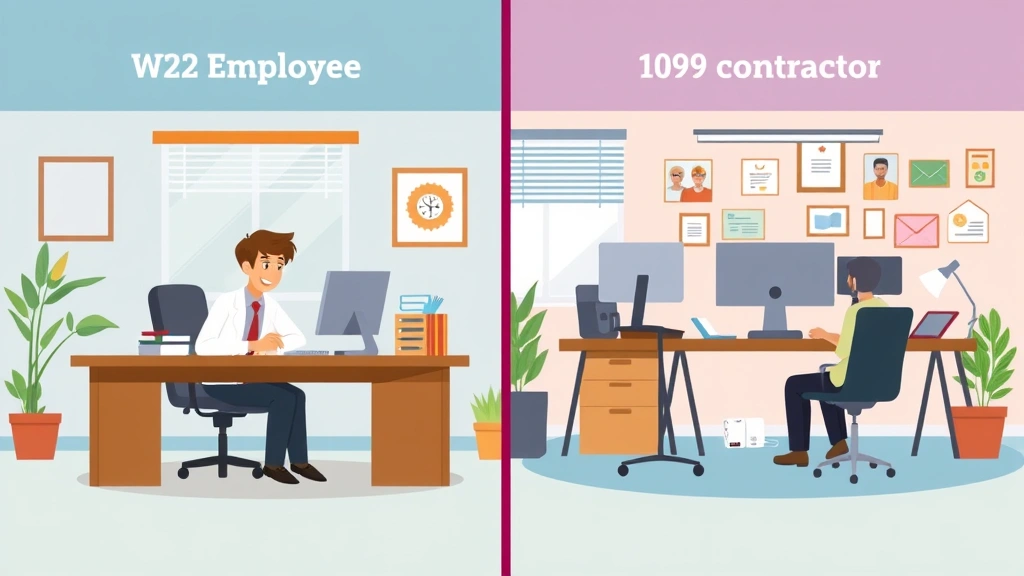
Understanding the distinctions between 1099 and W-2 employment is crucial for making informed career decisions. W-2 employees receive regular paychecks with automatic tax withholding, while 1099 contractors manage their own tax obligations. This fundamental difference cascades into numerous other distinctions affecting your financial life.
Employment Classification: W-2 employees work directly for a company, which controls how, when, and where work is performed. 1099 contractors maintain independence, setting their own schedules and methods. The IRS uses specific criteria to determine classification, and misclassification can result in penalties.
Tax Withholding: Employers automatically withhold federal, state, and FICA taxes from W-2 paychecks. 1099 contractors receive full payment but must calculate and remit taxes quarterly through estimated tax payments. This requires discipline to avoid underpayment penalties.
Benefits: W-2 employees typically receive health insurance, retirement plans, paid time off, and workers’ compensation. 1099 contractors receive none of these—you must purchase your own health insurance and establish personal retirement accounts. This significantly impacts your overall compensation needs.
Deductions: 1099 contractors can deduct legitimate business expenses, reducing taxable income. W-2 employees can only claim limited itemized deductions. This advantage helps contractors manage their tax burden more effectively.
If you’re exploring different employment options, consider entry level jobs with no experience or highest paying jobs without a degree as alternative paths depending on your experience level.
Tax Obligations for 1099 Contractors
1099 contractors face complex tax responsibilities that demand attention and organization. The IRS requires reporting all income, regardless of amount, though Form 1099-NEC is typically issued when earnings exceed $600 annually from a single client.
Income Reporting: You must report all 1099 income on your federal tax return, even if you don’t receive a Form 1099-NEC. The IRS has sophisticated matching systems that compare reported income with what clients submit. Underreporting invites audits and penalties.
Quarterly Estimated Taxes: Rather than paying annually, the IRS expects quarterly estimated tax payments. Failing to make these payments results in underpayment penalties. You must estimate your annual income, calculate taxes owed, and remit payments by April 15, June 15, September 15, and January 15.
State and Local Taxes: Beyond federal obligations, many states impose income taxes on 1099 contractors. Some cities require business licenses and local income taxes. Research your specific jurisdiction’s requirements to avoid surprise bills.
Record Keeping: Maintain meticulous records of all income and business expenses. The IRS requires documentation supporting deductions, and audit-proof records protect you during IRS inquiries. Digital accounting systems simplify this process considerably.
Self-Employment Tax Explained
Self-employment tax represents one of the most significant financial burdens for 1099 contractors. This tax covers Social Security and Medicare contributions, totaling approximately 15.3% of net earnings—significantly higher than the 7.65% employees pay because contractors pay both employer and employee portions.
As a W-2 employee, your employer covers half of FICA taxes while you pay the other half, automatically deducted from paychecks. 1099 contractors must pay the entire amount themselves. On $50,000 annual earnings, self-employment tax could exceed $7,000—a substantial expense many new contractors underestimate.
Calculating Self-Employment Tax: Use Schedule SE (Self-Employment Tax) to calculate obligations. You apply the self-employment tax rate to 92.35% of your net business income. However, you can deduct half of self-employment tax from your gross income, providing modest tax relief.
Tax Credits and Deductions: 1099 contractors can claim numerous business deductions reducing taxable income. Home office expenses, equipment, software subscriptions, professional development, insurance, and vehicle expenses are often deductible. These deductions substantially lower your overall tax burden compared to W-2 employees.
Working with a tax professional experienced with contractor taxation is invaluable. They identify deductions you might miss and ensure compliance, potentially saving thousands annually.
Benefits and Advantages of 1099 Work
Despite significant responsibilities, 1099 positions offer compelling advantages attracting millions of professionals. Understanding these benefits helps you evaluate whether contractor work aligns with your career goals.
Flexibility and Autonomy: 1099 contractors control their schedules, work environments, and project selection. Work from coffee shops, home offices, or traveling globally. Choose clients and projects matching your interests and expertise. This autonomy appeals especially to parents, students, and those seeking work-life balance.
Higher Earning Potential: Contractors often command higher hourly rates than W-2 employees performing similar work. Since you’re not receiving benefits, clients expect to compensate you at premium rates. Strategic pricing and multiple clients can generate substantial income exceeding traditional employment.
Tax Deductions: Business expense deductions significantly reduce taxable income. Home office, equipment, software, education, and travel expenses lower your tax liability. W-2 employees cannot claim similar deductions, giving contractors substantial tax advantages.
Diverse Income Streams: Unlike traditional employment limiting you to one employer, 1099 contractors work simultaneously with multiple clients. This diversification provides income stability and protects against losing a single client relationship.
Business Ownership: Contractors operate their own businesses, building assets and brand recognition. This entrepreneurial experience and portfolio development can lead to consulting firms, digital products, or other ventures.
Explore how to find jobs in startups or jobs in web development if you’re interested in contractor roles in growing industries.
Challenges and Disadvantages
The 1099 lifestyle presents substantial challenges requiring careful consideration before transitioning from traditional employment. Many professionals underestimate these difficulties, leading to financial hardship.
Income Instability: Unlike W-2 employees receiving consistent paychecks, contractor income fluctuates. Clients may reduce hours, delay payments, or terminate relationships unexpectedly. Building financial reserves covering 6-12 months of expenses is essential but difficult for many contractors.
No Employee Benefits: You must personally fund health insurance, often at premium rates. Retirement planning falls entirely on you—no employer matching contributions or automatic enrollment. Disability insurance, life insurance, and other protections require individual purchases.
Complex Tax Compliance: Managing quarterly estimated taxes, self-employment tax, deductions, and record-keeping demands financial literacy and organization. Mistakes result in penalties, interest, and audit risks. Many contractors hire accountants, adding significant expense.
Lack of Legal Protections: 1099 contractors don’t receive unemployment insurance, workers’ compensation, or FMLA protections. If injured or unable to work, no safety net exists. You’re also vulnerable to client disputes without employee protections.
Business Expenses: Contractors pay for equipment, software, professional development, and workspace. These expenses reduce net income significantly. A W-2 employee earning $60,000 might need $75,000 gross contractor income to achieve equivalent take-home pay after expenses and taxes.
Administrative Burden: Beyond tax complexity, you handle invoicing, payment collection, contract negotiation, and client management. Time spent on administration is time not billable to clients, reducing effective hourly rates.
Finding 1099 Job Opportunities
Numerous platforms and strategies help identify 1099 contractor positions across industries. Understanding where to search increases your chances of finding quality opportunities.
Freelance Platforms: Websites like Upwork, Fiverr, and Toptal connect contractors with clients seeking specific skills. These platforms handle payments and provide dispute resolution, though they take substantial commissions (typically 10-20%). Reviews and ratings build your reputation, attracting better-paying clients.
Industry-Specific Job Boards: Many industries maintain specialized job boards listing contractor positions. Designers find opportunities on Design Observer and Creative Circle. Writers explore Mediavine and ProBlogger. Software developers check GitHub Jobs and Stack Overflow.
Direct Client Outreach: Network with companies and professionals needing your services. Attend industry conferences, engage on LinkedIn, and pitch your expertise directly. Direct relationships often provide better rates and more stable work than platform-based opportunities.
Staffing Agencies: Specialized staffing firms place contractors with companies needing temporary or project-based talent. Agencies handle contracts, invoicing, and sometimes provide benefits. They take commissions but simplify administrative work.
Corporate Contractor Programs: Many large companies maintain contractor programs for specialized roles. Apply directly to company websites or contact recruiters. Corporate contracts often provide stability and better compensation than smaller clients.
When searching for opportunities, also explore jobs near me now hiring to understand local market rates and opportunities in your area.
For specialized fields, check best jobs for mechanical engineers to understand how your profession approaches contractor work.
Financial Planning for Independent Contractors
Successful 1099 contractors implement disciplined financial strategies ensuring stability and long-term success. Without employer-provided structure, you must create your own financial systems.
Tax Reserve Accounts: Immediately deposit 25-30% of gross income into dedicated tax savings accounts. This ensures funds exist when quarterly estimated taxes are due. Many contractors fail because they spend income before taxes are paid, creating cash flow crises.
Emergency Funds: Maintain 6-12 months of living expenses in accessible savings. Unlike W-2 employees with unemployment insurance, contractors need substantial reserves weathering income gaps. This safety net enables you to decline poor-paying clients and negotiate better terms.
Health Insurance: Research and purchase appropriate health insurance immediately. The Affordable Care Act marketplace offers options, though premiums are substantial. Some contractors join professional associations offering group rates. Never skip health insurance—medical emergencies devastate contractor finances.
Retirement Planning: Without employer retirement plans, establish SEP-IRAs or Solo 401(k)s. These allow substantial annual contributions, reducing taxable income while building retirement savings. Starting early leverages compound growth over decades.
Professional Accounting: Hire accountants specializing in contractor taxation. The $1,000-2,000 annual investment typically saves far more through deduction identification and tax optimization. Quality accountants also provide quarterly planning, preventing surprise tax bills.
Rate Setting: Calculate your required hourly rate by determining annual income needs, dividing by billable hours, then adding 30-50% for non-billable time (administration, marketing, downtime). Regularly review rates ensuring profitability and competitiveness.
Contract Negotiation: Always use written contracts specifying scope, timeline, payment terms, and intellectual property rights. Clear contracts prevent disputes and provide legal protection. Consider consulting business attorneys for complex engagements.
Consult resources like the Small Business Administration for comprehensive contractor guidance and business planning tools.
FAQ
Do I need to file taxes if I earn less than $600 as a 1099 contractor?
Yes. While clients don’t issue Form 1099-NEC for earnings under $600, the IRS still requires reporting all income on your tax return. The $600 threshold only determines when Form 1099-NEC is issued, not whether you must report income. Failure to report can result in penalties and audits.
Can I deduct my home office as a 1099 contractor?
Yes, you can deduct home office expenses using either the simplified method ($5 per square foot, maximum 300 square feet) or actual expense method. The actual expense method typically provides larger deductions but requires detailed documentation. Consult your accountant about which approach benefits your situation.
What happens if I don’t pay quarterly estimated taxes?
The IRS charges underpayment penalties and interest on taxes not paid quarterly. The penalties compound throughout the year, making the final tax bill substantially larger than originally owed. Additionally, you may face cash flow crises if unable to pay your full tax bill at year-end.
Should I form an LLC or S-Corp as a 1099 contractor?
This depends on your income level and specific circumstances. Higher-earning contractors (typically $60,000+) may benefit from S-Corp election, reducing self-employment tax. However, S-Corps require additional accounting and payroll processing. Consult with a business tax professional to evaluate whether incorporation benefits your situation.
How do I handle health insurance as a 1099 contractor?
Options include the ACA marketplace, professional association plans, spousal coverage, or short-term plans. The ACA marketplace often provides subsidized premiums for lower-income contractors. Investigate all options, as health insurance costs significantly impact your overall financial situation. Never go uninsured—medical emergencies create catastrophic debt.
Can 1099 contractors receive unemployment benefits if they lose clients?
No, independent contractors don’t qualify for unemployment insurance. This is why emergency savings are critical. You must maintain financial reserves covering extended periods without income, something W-2 employees don’t face.
What’s the difference between 1099-NEC and 1099-MISC?
The IRS eliminated 1099-MISC for non-employee compensation in 2020, replacing it with 1099-NEC. Form 1099-MISC still exists but is used for different purposes (rent, royalties, etc.). Most contractor income is now reported on 1099-NEC. Your accountant will clarify which forms you receive.
How much should I charge as a 1099 contractor?
Research industry rates for your skill level and geographic area. Contractors typically charge 25-50% more than equivalent W-2 salaries to account for taxes, benefits, and non-billable time. As you gain experience and reputation, increase rates accordingly. Never undercharge to win business—low rates attract demanding clients and create unsustainable work situations.
Working as a 1099 contractor offers genuine advantages for disciplined professionals willing to manage complex financial and administrative responsibilities. Success requires understanding tax obligations, maintaining financial discipline, and implementing proper business practices. Those who master these elements often find contractor work more rewarding and lucrative than traditional employment, while those who neglect these responsibilities face financial hardship and legal complications. Approach 1099 work strategically, invest in professional guidance, and build sustainable contractor practices supporting long-term success.


