
1099 Job Tips: Essential Tax Expert Advice for Independent Contractors
Working as a 1099 contractor offers flexibility and independence that traditional employment often cannot match. However, this freedom comes with significant financial and tax responsibilities that many contractors underestimate. Unlike W-2 employees who have taxes withheld automatically, 1099 contractors must manage their own tax obligations, quarterly payments, deductions, and retirement planning. Understanding these requirements isn’t just about compliance—it’s about maximizing your income and protecting yourself from costly mistakes.
Whether you’re transitioning to contract work, exploring 1099 job opportunities, or already established in independent contracting, this comprehensive guide provides actionable advice from tax experts and financial professionals. We’ll walk through everything from understanding your tax classification to implementing strategic deductions that reduce your tax burden while keeping you audit-proof.

Understanding 1099 Classification and Responsibilities
A Form 1099 is an IRS document that reports non-employee compensation to the government. When you receive a 1099-NEC or 1099-MISC, you’re classified as an independent contractor rather than an employee. This distinction carries profound implications for your taxes, benefits, and legal obligations. According to the IRS official guidance, contractors must meet specific criteria to maintain this classification legitimately.
The IRS uses three primary tests to determine worker classification: behavioral control, financial control, and relationship type. Behavioral control examines whether the company directs how work is performed. Financial control evaluates whether you provide tools, set your own rates, and control business expenses. Relationship factors consider whether benefits are provided and the permanence of the arrangement. Misclassification—whether intentional or accidental—can result in severe penalties for both employers and contractors.
As a 1099 contractor, you assume responsibility for:
- Income tax withholding: You must calculate and pay your own federal and state income taxes
- Self-employment taxes: Social Security and Medicare contributions totaling approximately 15.3% of net earnings
- Quarterly estimated payments: Four annual payments to avoid penalties and interest
- Business expenses: Tracking and documenting deductible expenses
- Retirement contributions: Building your own retirement savings without employer matching
- Health insurance: Securing your own coverage without employer subsidies
Understanding these responsibilities upfront prevents surprises during tax season and allows you to plan strategically throughout the year.
Quarterly Estimated Tax Payments Explained
The most critical tax obligation for 1099 contractors is making quarterly estimated tax payments. The IRS requires you to pay taxes on income as you earn it, not just once annually. These payments are due on April 15, June 15, September 15, and January 15 of the following year. Missing these deadlines results in underpayment penalties and interest charges, even if you ultimately owe nothing when filing your return.
Calculating estimated taxes requires projecting your annual income and deducting anticipated business expenses. Many contractors use this formula: (Projected Annual Income – Projected Annual Deductions) × Effective Tax Rate = Estimated Annual Tax. Divide this by four for your quarterly payment amount. However, tax rates vary based on your total income, filing status, and state residence, making accurate calculation challenging without professional guidance.
A practical approach involves setting aside 25-30% of every payment you receive into a dedicated tax savings account. This conservative strategy accounts for both income tax and self-employment taxes, preventing the common mistake of underpaying. Tax software like EFTPS (Electronic Federal Tax Payment System) makes payments simple and provides confirmation documentation.
Consider these quarterly payment strategies:
- Safe harbor method: Pay 100% of your prior year’s tax liability (110% if prior year AGI exceeded $150,000) to avoid penalties regardless of current year income
- Current year method: Pay 90% of your current year projected tax liability for more accurate payments
- Annualized income method: Calculate tax based on income earned through each quarter, beneficial if income is uneven
Many contractors find working with a CPA or tax professional invaluable for quarterly planning, especially when income fluctuates significantly.
Essential Deductions Every 1099 Contractor Should Know
Strategic deductions are your primary tax advantage as a 1099 contractor. The IRS allows you to deduct all ordinary and necessary business expenses, directly reducing your taxable income. The difference between tracking deductions meticulously and ignoring them can represent thousands of dollars in annual tax liability.
Home office deductions are among the most valuable for remote contractors. You can deduct either 5 dollars per square foot (simplified method) or calculate actual expenses including rent/mortgage interest, utilities, insurance, and maintenance proportional to office space. If you maintain a dedicated workspace, this deduction is defensible and substantial.
Professional development directly impacts your ability to secure specialized contract positions and command higher rates. Deductible professional development includes:
- Industry certifications and licensing requirements
- Online courses and training programs related to your field
- Professional conference attendance and travel
- Books, subscriptions, and educational materials
- Memberships in professional organizations
Equipment and technology purchases are fully deductible in the year purchased (or depreciated over useful life depending on cost). This includes computers, software, cameras, audio equipment, furniture, and tools. Keep detailed receipts and serial numbers for valuable items.
Vehicle expenses deserve special attention. You can deduct either actual expenses (fuel, maintenance, insurance, depreciation) or use the IRS standard mileage rate (currently 67 cents per business mile for 2024). Track mileage meticulously with a log noting date, destination, purpose, and miles driven. The standard deduction is simpler but actual expenses often yield larger deductions for contractors with significant vehicle usage.
Additional deductible expenses include:
- Insurance (liability, professional, health insurance premiums)
- Office supplies and equipment under $2,500
- Internet and phone services (business portion)
- Client entertainment and meals (50% deductible)
- Advertising and marketing expenses
- Contractor fees and subcontractor payments
- Bank fees and business accounting software
- Travel expenses for business purposes
The key to maximizing deductions is maintaining organized records and understanding that the IRS scrutinizes contractor deductions more heavily than W-2 employees. Document everything with receipts, invoices, and clear business purpose explanations.
Setting Up Your Business Financial System
Proper financial organization separates successful contractors from those who face audit complications. Begin by establishing a dedicated business bank account separate from personal finances. This single step dramatically simplifies tax preparation, provides clear audit trails, and demonstrates to the IRS that you operate as a legitimate business.
Accounting software like QuickBooks Self-Employed, FreshBooks, or Wave (free option) automates expense tracking and generates quarterly tax estimates. These platforms categorize expenses automatically, track mileage, and produce reports for tax preparation. The time investment in learning your chosen system pays dividends throughout the year.
Implement a consistent invoicing system that includes your tax ID, invoice number, date, client information, detailed service description, and payment terms. Professional invoicing demonstrates business legitimacy and creates documentation for income verification. Many contractors working in manufacturing and technical industries benefit from detailed project-based invoicing that clearly documents work performed.
Monthly financial reviews (15-30 minutes) prevent year-end surprises. Review income received, expenses paid, and compare actual results to quarterly tax payment estimates. This habit identifies income shortfalls or expense overages early, allowing for adjustments before tax season.
Consider implementing these financial practices:
- Monthly reconciliation: Match bank statements to accounting records
- Expense categorization: Organize spending into consistent tax categories
- Income tracking: Record all income sources with corresponding documentation
- Tax reserve calculation: Maintain running total of estimated tax liability
- Quarterly review meetings: Schedule time to assess financial performance
Self-Employment Tax Strategies
Self-employment tax represents the contractor’s largest tax burden—approximately 15.3% of net earnings for both Social Security and Medicare. Unlike W-2 employees who split this cost with employers, contractors pay the full amount. However, you can deduct half of self-employment tax when calculating adjusted gross income, providing modest tax relief.
Understanding self-employment tax calculation is essential for accurate quarterly estimates. The calculation applies the 15.3% rate to 92.35% of net self-employment income (after deducting half of self-employment tax itself). This means a contractor earning $60,000 in net business income owes approximately $8,478 in self-employment tax annually, or roughly $2,120 per quarter.
Strategic business structure decisions significantly impact self-employment taxes. While most contractors operate as sole proprietors, some benefit from forming an S-Corporation election. This strategy allows you to pay yourself a reasonable salary (subject to self-employment tax) and distribute remaining profits as dividends (not subject to self-employment tax). However, S-Corp formation involves filing fees, payroll processing, and additional tax returns, making it worthwhile only for contractors consistently earning $60,000+ annually.
Maximize self-employment tax deductions through:
- Solo 401(k) contributions: Contribute up to $69,000 (2024) combining employee deferrals and employer contributions
- SEP-IRA establishment: Contribute up to 25% of net self-employment income (maximum $69,000)
- Solo Roth IRA: Build tax-free retirement savings with $7,000 annual contributions
- Health insurance deduction: Deduct 100% of self-paid health insurance premiums
Record Keeping and Documentation Best Practices
The IRS requires contractors to maintain records substantiating all income and deductions claimed. Inadequate documentation is the leading cause of audit adjustments and penalties. The burden of proof falls entirely on you—the IRS doesn’t need to prove you owe additional tax; you must prove you don’t.
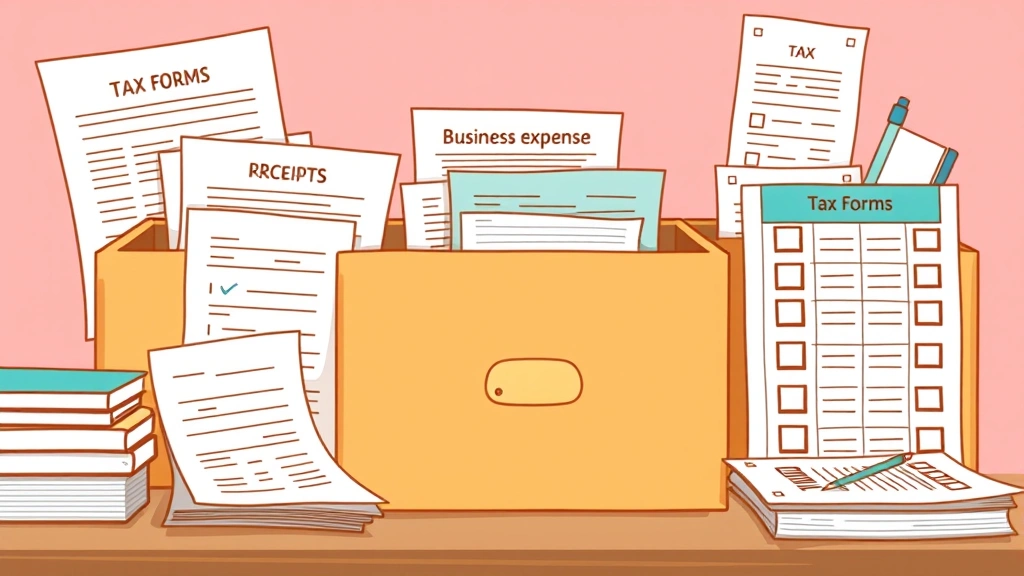
Create a filing system organizing records by category: income documentation, expense receipts, mileage logs, and professional development records. Digital organization using cloud storage (Google Drive, Dropbox, OneDrive) provides backup protection and easy access during tax preparation. Many contractors photograph receipts immediately upon purchase, eliminating paper clutter while maintaining documentation.
Income documentation requirements include:
- 1099 forms from all clients
- Bank statements showing deposits
- Invoice copies and payment confirmations
- Client contracts specifying rates and terms
Expense documentation standards vary by deduction type. For most expenses under $75, the receipt showing date, amount, and business purpose suffices. Larger expenses require itemized receipts showing what was purchased. Vehicle expenses demand contemporaneous mileage logs (not reconstructed months later). Meal and entertainment expenses require documentation of attendees, location, date, and business purpose.
Maintain records for at least seven years. While the IRS typically audits within three years of filing, complex returns or substantial underreporting can trigger audits back seven years. Some contractors facing high-income years or aggressive deductions maintain records indefinitely.
Retirement Planning for Independent Contractors
Independent contractors lack employer-sponsored retirement plans, making self-directed retirement savings essential. The good news: contractors have access to powerful retirement vehicles often exceeding W-2 employee options in contribution limits and flexibility.
Solo 401(k) plans offer the highest contribution limits for self-employed individuals. You can contribute up to $23,500 (2024) as employee deferrals plus up to 25% of net self-employment income as employer contributions, totaling $69,000 maximum annually. Solo 401(k)s also allow loans against your balance and offer investment flexibility through self-directed options.
SEP-IRA (Simplified Employee Pension) plans simplify administration with minimal paperwork. You contribute up to 25% of net self-employment income (maximum $69,000), with contributions entirely tax-deductible. SEP-IRAs work particularly well for contractors with variable income since contribution percentages adjust with earnings.
Solo Roth IRA accounts build tax-free retirement savings. While annual contributions are limited to $7,000 (2024), all growth and withdrawals in retirement are tax-free. This strategy benefits younger contractors expecting significant income growth, locking in current tax rates while building substantial tax-free wealth.
Retirement planning strategies for contractors include:
- Maximize tax-deductible contributions: Reduce current year taxable income while building retirement assets
- Diversify account types: Combine traditional (tax-deductible) and Roth (tax-free growth) accounts
- Start early: Leverage compound growth over decades of contracting work
- Review annual limits: Contribution limits increase periodically; adjust contributions accordingly
Many contractors benefit from consulting a financial advisor specializing in self-employed tax planning to optimize retirement contributions relative to income and tax situation.
Common 1099 Tax Mistakes to Avoid
Even experienced contractors make costly tax mistakes. Understanding common pitfalls prevents expensive corrections and audit complications.
Mistake #1: Underestimating quarterly tax payments. Contractors frequently pay insufficient estimated taxes, facing penalties and interest when filing returns. Conservative contractors set aside 30% of all income, accounting for both income and self-employment taxes. This approach prevents underpayment regardless of deductions claimed.
Mistake #2: Mixing personal and business expenses. Claiming personal expenses as business deductions is fraud, inviting audit and penalties. Maintain clear separation: dedicated business accounts, business-only credit cards, and meticulous categorization prevent this costly error. The IRS scrutinizes contractor deductions heavily, and personal expense claims often trigger deeper audits.
Mistake #3: Neglecting mileage logs. The IRS requires contemporaneous mileage documentation—logs created at the time of travel, not months later during tax prep. Reconstructed mileage logs lack credibility and are often disallowed entirely. Use smartphone apps like MileIQ or Stride Health that automatically track driving, eliminating manual logging burden.
Mistake #4: Claiming excessive home office deductions. Contractors often deduct disproportionate home office percentages, triggering audits. The IRS expects home office deductions to reflect actual dedicated workspace percentage. A contractor claiming 50% of a 2,000 square foot home as office space (1,000 square feet) faces credibility challenges. Use the simplified method (5 dollars per square foot, maximum 300 square feet) when workspace documentation is weak.
Mistake #5: Ignoring estimated tax deadlines. Missing quarterly payment deadlines results in penalties and interest even if you ultimately owe nothing. Set calendar reminders for payment deadlines and use EFTPS electronic filing to ensure timely, documented payments.
Mistake #6: Failing to track hobby versus business income. The IRS distinguishes between legitimate businesses (expecting profit) and hobbies (personal pursuits generating incidental income). Businesses can deduct losses; hobbies cannot. Maintain business-like operations: separate accounts, invoices, marketing efforts, and profit-seeking behavior to establish legitimate business status. This distinction becomes critical for contractors in nonprofit consulting or hospitality contracting roles that sometimes blur personal and professional boundaries.
Mistake #7: Inadequate documentation. Vague expense categories and missing receipts create audit vulnerabilities. Every deduction requires contemporaneous documentation. Establish a system requiring receipts for all expenses before categorizing them in accounting software.
Mistake #8: Ignoring state and local tax obligations. Federal tax compliance is necessary but insufficient. Many states require contractor income reporting, estimated tax payments, and business licensing. Some cities impose contractor taxes. Research your jurisdiction’s requirements and budget accordingly—state taxes can add 5-10% to your total tax burden.
Mistake #9: Delaying tax professional consultation. Many contractors attempt DIY tax preparation to save money, missing valuable deductions and making costly errors. A quality tax professional typically pays for themselves through deduction optimization and audit avoidance. Consider professional help a business investment, not an expense.
FAQ
When are 1099 quarterly estimated tax payments due?
Quarterly estimated tax payments are due April 15, June 15, September 15, and January 15 of the following year. These deadlines are firm—missing them results in penalties and interest regardless of whether you ultimately owe taxes. Using the IRS EFTPS system ensures payment documentation and helps prevent missed deadlines.
Can I deduct home office expenses if I work from home occasionally?
The IRS requires a dedicated, regular workspace for home office deductions. Occasionally working from home doesn’t qualify. However, if you maintain a dedicated office space used exclusively for business, you can deduct either actual expenses proportional to office space or use the simplified method (5 dollars per square foot, maximum 300 square feet). The simplified method is simpler but actual expense deduction often yields larger savings.
What’s the difference between a 1099-NEC and 1099-MISC?
The 1099-NEC (Nonemployee Compensation) reports payments for services from non-employee contractors. The 1099-MISC reports miscellaneous income including rent, royalties, and other non-service payments. Most independent contractors receive 1099-NEC forms. The tax treatment is identical regardless of form type—both must be reported as self-employment income on Schedule C.
How much should I save for taxes as a 1099 contractor?
A conservative approach is setting aside 30% of all income received. This accounts for federal income tax (varies by bracket, typically 22-37%), self-employment tax (15.3%), and state income taxes (0-13% depending on location). After calculating actual tax liability at year-end, many contractors adjust future savings rates. Setting aside 30% prevents year-end surprises and maintains positive cash flow for quarterly payments.
Is forming an S-Corporation worth it for 1099 contractors?
S-Corporation formation makes financial sense when you consistently earn $60,000+ annually. The strategy allows paying yourself a reasonable salary (subject to self-employment tax) and distributing remaining profits as dividends (not subject to self-employment tax). However, S-Corps require additional tax returns, payroll processing, and accounting complexity. Calculate potential self-employment tax savings against formation and ongoing costs before deciding. A tax professional can model your specific situation to determine if S-Corp election is beneficial.
What records should I keep for 1099 income?
Maintain 1099 forms from all clients, bank statements showing deposits, invoice copies, and client contracts specifying rates. For substantial income sources, also keep email correspondence documenting work performed and payment terms. The IRS may request documentation substantiating income amounts, particularly for high-income contractors or those claiming significant deductions. Organized income documentation prevents audit complications and speeds tax preparation.
Can I deduct client entertainment expenses?
Yes, but with limitations. Meal and entertainment expenses are 50% deductible if they’re ordinary and necessary for business purposes. Documentation must include the date, location, attendees, amount spent, and business purpose. Entertainment directly preceding or following business discussions is most defensible. However, personal meals, country club memberships, and entertainment without clear business purpose often trigger audit adjustments.
How do I handle unpaid invoices for tax purposes?
Most contractors using the cash method (income when received) don’t report unpaid invoices as income. However, if a client becomes insolvent, you may claim a bad debt deduction for the uncollected amount. Document collection efforts and the reason for non-payment. The accrual method (income when earned) reports unpaid invoices immediately but is more complex and rarely used by individual contractors. Consult a tax professional about your situation if significant uncollected income exists.


