
What is a 1099 Job? Expert Breakdown
A 1099 job represents one of the most significant shifts in how professionals structure their careers today. Named after the IRS Form 1099 that independent contractors receive instead of the traditional W-2, these positions offer flexibility, autonomy, and earning potential that traditional employment often cannot match. However, they also come with unique responsibilities, financial considerations, and lifestyle adjustments that require careful planning and understanding.
Whether you’re considering transitioning to contract work, exploring side gigs, or evaluating a full-time 1099 opportunity, this comprehensive guide will walk you through everything you need to know about independent contractor positions. From tax implications to benefits planning, we’ll cover the practical realities of this employment model and help you determine if it’s the right fit for your career goals.

Understanding 1099 Jobs: Definition and Basics
A 1099 job is a position where you work as an independent contractor rather than a traditional employee. The IRS Form 1099-NEC (Miscellaneous Income) or 1099-MISC is issued by clients or companies you work for, documenting the income you’ve earned during the tax year. This form replaces the W-2 that employees receive and signals a fundamentally different employment relationship.
When you accept a 1099 position, you’re essentially running your own business, even if you work exclusively for one client. You control how, when, and where you work, set your own rates (within market parameters), and manage your own business operations. This independence is the defining characteristic of 1099 work, and it shapes every aspect of how you’ll manage your career and finances.
The relationship between contractor and client is typically defined by a contract that outlines scope of work, payment terms, deliverables, and other conditions. Unlike W-2 employees, 1099 contractors don’t receive benefits like health insurance, paid time off, or retirement contributions from their clients. Instead, contractors are responsible for securing these benefits independently or doing without them.
Common 1099 roles span virtually every industry but are particularly prevalent in creative fields, technology, consulting, writing, design, and specialized services. From technology positions to freelance writing, many professionals choose or are forced into this arrangement for various reasons.
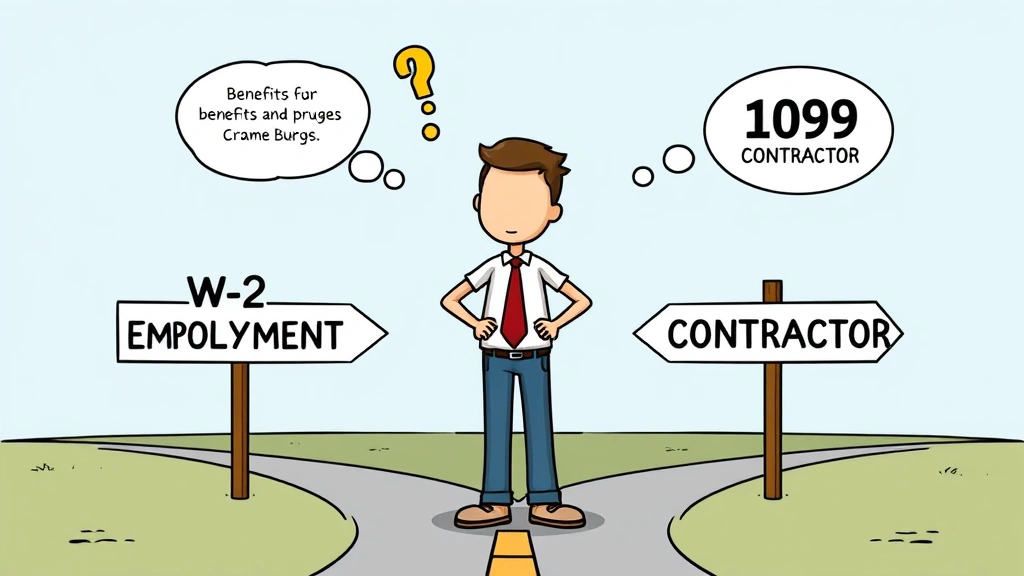
Key Differences Between 1099 and W-2 Employment
Understanding the distinctions between 1099 and traditional W-2 employment is crucial before making the transition. These differences affect your taxes, benefits, job security, and overall financial picture in meaningful ways.
Employment Classification: W-2 employees are considered employees of the company, while 1099 contractors are independent business operators. This classification determines your rights, responsibilities, and protections under employment law. The IRS has specific criteria for determining whether someone should be classified as a contractor or employee, focusing on the level of control the company has over how work is performed.
Tax Responsibility: W-2 employees have taxes withheld from their paychecks, and employers cover half of Social Security and Medicare taxes. 1099 contractors must pay the full amount of self-employment taxes (approximately 15.3% combined) and handle all tax withholding themselves. This represents a significant financial difference that many new contractors underestimate.
Benefits and Protections: W-2 employees typically receive health insurance, dental, vision, retirement plans, unemployment insurance, and workers’ compensation. 1099 contractors receive none of these benefits and must secure them independently, which can be expensive. You’re also not eligible for unemployment benefits if your contract ends.
Work Flexibility: 1099 contractors generally enjoy greater flexibility in how they structure their work. You can set your own hours, work from anywhere, and take on multiple clients simultaneously. W-2 employees typically have set schedules and work arrangements defined by their employer.
Income Stability: W-2 employment provides consistent paychecks and job security (within reason). 1099 work offers variable income that depends on the amount of work you secure and your billing rates. A contract can end at any time, and you’re responsible for finding your next client.
Tax Obligations and Deductions
Perhaps the most critical aspect of 1099 work involves understanding your tax obligations. Many contractors are caught off-guard by their tax bills because they didn’t plan adequately or understand what they owed.
Self-Employment Tax: As a 1099 contractor, you pay self-employment tax on 92.35% of your net income. This covers Social Security and Medicare. For 2024, the self-employment tax rate is 15.3% (12.4% for Social Security up to the annual cap, and 2.9% for Medicare). This is significantly higher than the 7.65% that W-2 employees pay, since contractors must cover the employer’s portion as well.
Income Tax: You’re also responsible for paying federal income tax on your net business income. The amount depends on your total income and tax bracket. Unlike W-2 employees with automatic withholding, you must either make quarterly estimated tax payments or face penalties and interest when you file your annual return.
Legitimate Deductions: One advantage of 1099 work is the ability to deduct legitimate business expenses. Common deductions include home office expenses, equipment and software, professional development and training, client entertainment, travel costs, health insurance premiums (self-employed health insurance deduction), and half of your self-employment taxes. Keeping meticulous records of all business expenses is essential for maximizing deductions and defending your tax return if audited.
Quarterly Estimated Taxes: Most 1099 contractors must make quarterly estimated tax payments to the IRS. These are due April 15, June 15, September 15, and January 15. Failing to make these payments can result in penalties and interest, even if you ultimately have taxes withheld correctly when you file your annual return.
Many contractors work with tax professionals or accountants to ensure they’re handling their tax obligations correctly. The cost of professional help is typically deductible and often pays for itself through optimized deductions and avoided penalties.
Financial Planning for Independent Contractors
Successful 1099 contractors treat their work like a business and engage in deliberate financial planning. This planning should address taxes, benefits, retirement, and income stability.
Setting Aside Tax Money: A fundamental best practice is setting aside 25-30% of every payment you receive into a separate savings account designated for taxes. This ensures you have the funds available when quarterly payments are due or when you file your annual return. Many contractors use a separate business bank account to make this easier to track.
Pricing Your Services: When negotiating job offers as a contractor, you need to price your services higher than you might expect as a W-2 employee. Your rate must cover your salary, taxes, benefits, and business expenses. A common rule of thumb is that your 1099 rate should be 25-40% higher than what you’d expect as an employee for similar work, depending on your industry and circumstances.
Health Insurance: Health insurance is typically the largest expense for independent contractors. You can purchase plans through the Affordable Care Act marketplace, join a professional association that offers group plans, or explore short-term coverage options. Some contractors use Health Savings Accounts (HSAs) paired with high-deductible plans as a tax-efficient strategy.
Retirement Planning: Without an employer 401(k) match, you’re responsible for retirement savings. Options include SEP IRAs, Solo 401(k)s, and SIMPLE IRAs. These accounts allow higher contribution limits than traditional IRAs and offer tax advantages. A Solo 401(k) can allow contributions up to $69,000 in 2024 (including self-employed contributions), making it an attractive option for higher-earning contractors.
Emergency Fund: Because 1099 income is variable, maintaining a robust emergency fund is critical. Financial experts recommend 6-12 months of expenses, which may be higher than the 3-6 months typically recommended for W-2 employees. This buffer helps you weather client loss, project delays, or slow seasons without financial stress.
Business Liability Insurance: Depending on your field, you may want professional liability insurance, general liability insurance, or errors and omissions coverage. This protects you financially if a client sues you for damages or claims you failed to deliver promised services.
Industries and Roles Commonly Offering 1099 Positions
While 1099 positions exist across virtually every industry, some sectors rely more heavily on independent contractors than others.
Technology and IT: Software developers, web developers, UX designers, data analysts, and IT consultants frequently work as 1099 contractors. Tech companies often prefer the flexibility of contractor relationships, and many tech professionals prefer the autonomy and earning potential of independent work. Explore more in our comprehensive technology jobs guide.
Creative and Design: Graphic designers, video editors, photographers, animators, and creative directors frequently work on a 1099 basis. These fields have embraced the freelance model for decades, and many clients expect to work with independent contractors rather than full-time employees.
Writing and Content: Copywriters, content strategists, technical writers, and journalists often work as 1099 contractors. The rise of digital content has created enormous demand for freelance writers across industries.
Consulting: Business consultants, management consultants, HR consultants, and strategy advisors frequently operate as independent contractors. Companies hire consultants for specific projects or periods rather than full-time positions.
Sales and Commission-Based Roles: Many sales positions operate on a 1099 basis with commission-based compensation. These roles offer significant earning potential for high performers. Learn more about commission-based employment structures.
Trades and Skilled Services: Electricians, plumbers, contractors, and other skilled trades frequently work as independent contractors. These roles often involve significant startup costs for equipment and licensing.
Virtual Assistance and Administrative: Virtual assistants, bookkeepers, and administrative professionals increasingly work as 1099 contractors, supporting multiple clients simultaneously.
Advantages of 1099 Work
For the right person, 1099 work offers compelling advantages that make it an attractive career choice.
Autonomy and Control: As a 1099 contractor, you have substantial control over your work. You decide which clients to work with, how to structure your time, and what projects to pursue. This autonomy appeals to entrepreneurs and self-directed professionals who chafe under traditional employment constraints.
Earning Potential: 1099 contractors can earn significantly more than W-2 employees in the same field. You capture the full value of your work and can increase earnings by raising rates, taking on more clients, or improving efficiency. High-demand specialists in fields like technology and consulting can command premium rates.
Flexibility: 1099 work offers flexibility in scheduling, location, and work arrangement. You can work from anywhere with an internet connection, adjust your schedule around personal commitments, and take time off when you need it (though this affects your income). This flexibility is invaluable for parents, caregivers, and those with other commitments.
Variety and Professional Growth: Working with multiple clients exposes you to diverse projects, industries, and challenges. This variety accelerates learning and provides rich material for your professional development. You build a broader network and skill set than you might in a single-company role.
Tax Advantages: Legitimate business deductions can significantly reduce your taxable income. Home office deductions, equipment, software, professional development, and other business expenses all reduce what you owe in taxes. Structuring your business appropriately (as an S-corp, for example) can provide additional tax savings.
No Corporate Politics: As an independent contractor, you’re insulated from many workplace politics, office drama, and organizational dysfunction. You can focus on delivering excellent work to your clients without getting caught up in internal company issues.
Challenges and Disadvantages
While 1099 work offers significant advantages, it also comes with real challenges that shouldn’t be minimized.
Income Instability: 1099 income is inherently variable. Some months or quarters will be strong, while others may be slow. Client projects end, contracts aren’t renewed, and new business takes time to develop. This instability can create stress and require significant financial reserves.
No Benefits: You’re responsible for securing your own health insurance, retirement benefits, and paid time off. These expenses can be substantial, and you must budget for them carefully. Unlike W-2 employees, you don’t receive paid vacation, sick leave, or holidays—when you’re not working, you’re not earning.
Tax Complexity and Burden: Managing quarterly estimated taxes, tracking deductions, and filing business tax returns is more complex than W-2 employment. You also pay the full self-employment tax burden rather than having an employer cover half. The total tax burden can be 20-25% higher than for comparable W-2 employees.
Lack of Job Security: Contracts can end at any time, often with little notice. You have no unemployment insurance to fall back on and must immediately begin searching for new clients. This uncertainty can be stressful, particularly during economic downturns when clients cut back on contractor spending.
Isolation and Loneliness: Many 1099 contractors work alone, which can lead to isolation and loneliness. You miss the social interaction, mentorship, and camaraderie that traditional workplaces provide. Building community requires intentional effort.
Self-Discipline and Motivation: Without a boss, structured schedule, or office environment, maintaining discipline and motivation can be challenging. Some people thrive with this autonomy, while others struggle without external structure and accountability.
No Employer Protections: You lack the legal protections that W-2 employees receive, including minimum wage requirements, overtime protections, and workers’ compensation. Disputes with clients can be costly and time-consuming to resolve.
How to Transition to 1099 Work
If you’re considering transitioning to 1099 work, careful planning increases your chances of success and reduces financial stress.
Build Financial Reserves: Before making the transition, build an emergency fund of 6-12 months of expenses. This buffer allows you to take time to establish yourself, weather slow periods, and avoid desperate decisions when income is inconsistent. Without adequate reserves, you’ll feel pressured to accept unfavorable terms just to pay bills.
Research Your Market Rate: Understand what 1099 contractors in your field and location earn. Research on freelance platforms, industry surveys, and conversations with other contractors will inform your pricing. Remember that your rate must cover taxes, benefits, and business expenses in addition to your actual salary.
Secure Health Insurance: Before leaving W-2 employment, arrange health insurance coverage. Review options on the healthcare.gov marketplace, explore professional associations, or investigate COBRA continuation coverage. Having this arranged before you transition reduces stress and ensures you maintain coverage.
Start Part-Time or Gradually: If possible, begin taking on 1099 work while still employed. This allows you to test the waters, build a client base, and understand the realities before relying entirely on contractor income. A gradual transition is less risky than jumping in all at once.
Establish Business Infrastructure: Set up a business bank account separate from your personal account. Establish a simple accounting system to track income and expenses. Determine your business structure (sole proprietor, LLC, S-corp) with input from a tax professional. These foundational elements make managing your business much easier.
Set Up Tax Planning: Work with a tax professional or accountant to understand your tax obligations, plan for quarterly payments, and identify deductions. Many contractors find that professional tax guidance pays for itself through optimized planning and avoided penalties.
Develop Client Acquisition Skills: Your ability to find and win clients is critical to success. Develop skills in networking, marketing, and sales. Build a strong portfolio or case studies demonstrating your work. Establish an online presence through a website, LinkedIn profile, or relevant platforms in your industry.
Create a Business Plan: Develop a simple business plan outlining your services, target market, pricing, financial projections, and marketing strategy. This plan doesn’t need to be elaborate but should help you think through how you’ll build and sustain your business.
Build Your Network: Strong relationships are essential for consistent 1099 work. Actively build your professional network through industry events, online communities, and referrals. Many contractors find that word-of-mouth referrals from satisfied clients become their most reliable source of new business.
Visit the Job Find Daily blog for additional resources on career planning and job transitions.
FAQ
What does 1099 mean?
1099 refers to the IRS forms (Form 1099-NEC or 1099-MISC) that independent contractors receive instead of W-2 forms. These forms document income earned from clients and indicate that you’re classified as an independent contractor rather than an employee. The term “1099 job” describes any position where you work as an independent contractor.
How much should I charge as a 1099 contractor?
Your 1099 rate should be 25-40% higher than what you’d expect as a W-2 employee for similar work. This increase covers self-employment taxes (approximately 15.3%), health insurance, retirement contributions, business expenses, and profit. Research your specific field, location, and experience level to determine appropriate rates. Freelance platforms and industry surveys provide useful benchmarking data.
Do I need to pay taxes quarterly as a 1099 contractor?
Most 1099 contractors must make quarterly estimated tax payments to the IRS. These are due April 15, June 15, September 15, and January 15. If your estimated tax liability exceeds $1,000, you’ll likely owe penalties and interest if you don’t make these payments. Work with a tax professional to calculate your estimated payments accurately.
What benefits do 1099 contractors receive?
1099 contractors don’t receive benefits from their clients. You must secure your own health insurance, retirement plans, paid time off, and other benefits. This is one of the most significant differences between 1099 and W-2 employment and is an important factor in pricing your services and financial planning.
Can I work for multiple clients as a 1099 contractor?
Yes, one of the key advantages of 1099 work is the ability to work with multiple clients simultaneously. However, review your contracts carefully, as some clients may have exclusivity clauses or restrictions on working with competitors. Diversifying your client base also reduces income instability by preventing over-reliance on any single client.
What happens if a 1099 contract ends?
When a 1099 contract ends, you’re no longer earning income from that client and must find new work. Unlike W-2 employees, you’re not eligible for unemployment benefits. This is why maintaining a strong network, building your reputation, and continuously marketing yourself are critical for 1099 contractors. Having multiple clients reduces the impact of any single contract ending.
Is 1099 work right for me?
1099 work is ideal for self-directed professionals who value autonomy, can handle income variability, and are comfortable with self-promotion and client management. It’s less suitable for people who prefer stable income, structured environments, and comprehensive benefits. Consider your financial situation, personality, and career goals carefully before making the transition.
What business expenses can I deduct?
Legitimate business deductions include home office expenses, equipment and software, professional development and training, client entertainment, travel costs, marketing and advertising, insurance premiums, and half of your self-employment taxes. Keep detailed records of all business expenses to support your deductions. Work with a tax professional to ensure you’re maximizing deductions while staying compliant.
Should I form an LLC or S-corp?
The right business structure depends on your income level, state laws, and specific circumstances. A sole proprietorship is simplest but offers no liability protection. An LLC provides liability protection with minimal complexity. An S-corp election can provide tax savings for higher-earning contractors but involves more administrative requirements. Consult with a tax professional or business attorney to determine the best structure for your situation.


